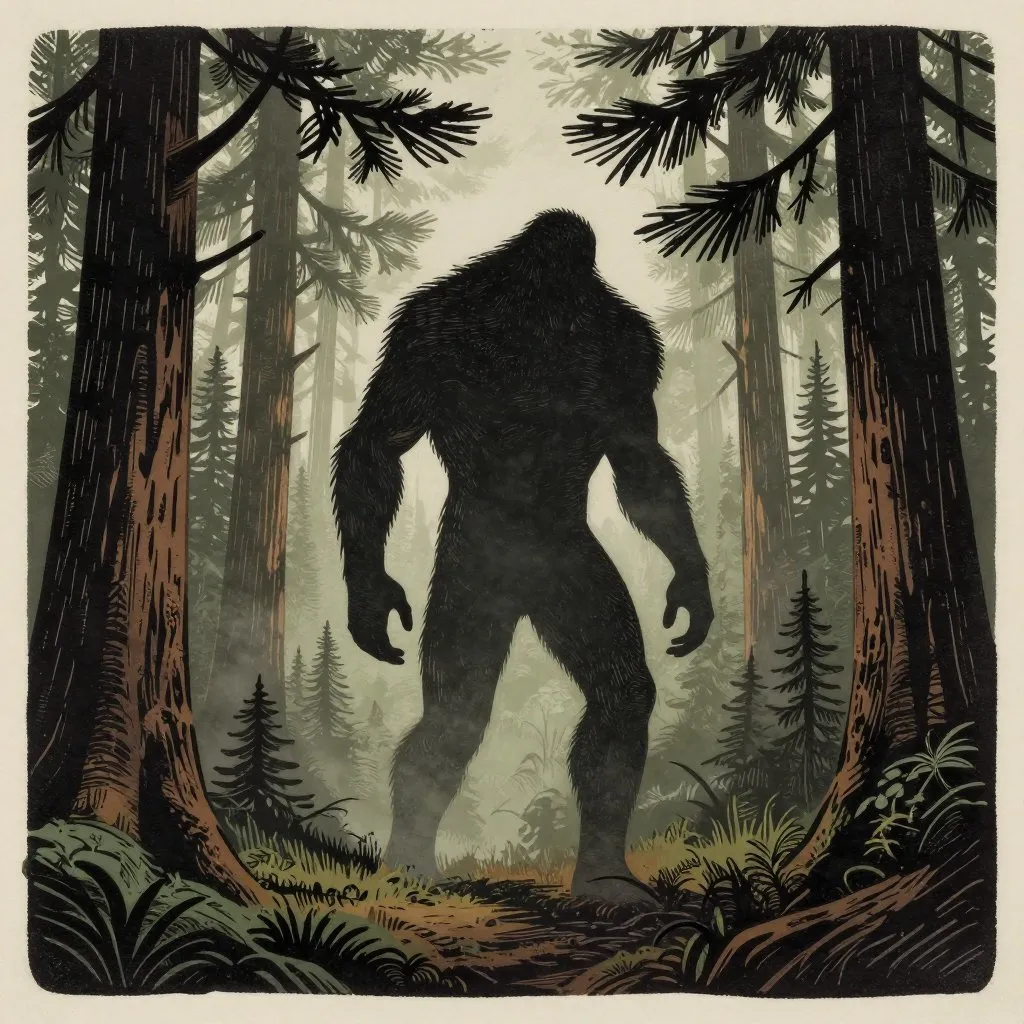
The Footprint
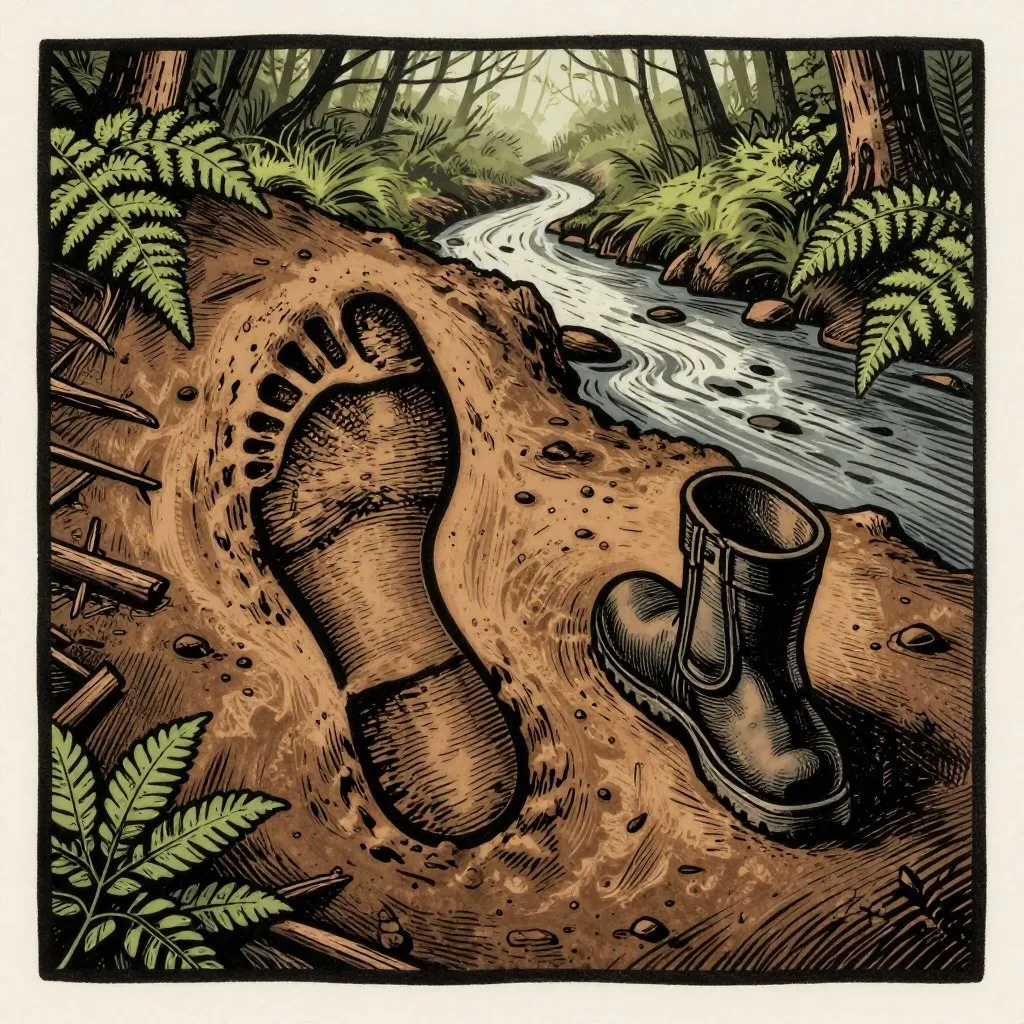
In August of 1958, a bulldozer operator named Jerry Crew showed up for work at a logging site near Bluff Creek, California. The road he had been grading the day before had footprints in it. Large ones. Sixteen inches long, pressed deep into the mud, spaced about four feet apart. Jerry wore size eleven boots. He was not a small man. Whatever left these prints was not a man at all. Or it was a very committed one.
Jerry did what any reasonable person would do. He made a plaster cast. Then he drove it to the office of the Humboldt Times and set it on the editor's desk. The editor looked at the cast. He looked at Jerry. He ran the story.
The headline used the word "Bigfoot." First time in print. No committee voted on it. No marketing team A/B tested it against "Forestfoot" or "Tallwalker." A newspaper editor in a small California town just typed it, and it stuck. The creature had been walking around the Pacific Northwest for possibly thousands of years without a name. Now it had one, and it was not particularly dignified.
The story went national within a week. Other people came forward. They had seen things. Heard things. Found prints of their own. The woods had been doing something strange for a long time, it turned out. Jerry Crew just happened to be the first person who brought a bag of plaster.
The Home Movie Nobody Asked For
Nine years later, two men rode horses into the same stretch of Northern California forest. Roger Patterson was a rodeo rider from Yakima, Washington, who had written a self-published book about Bigfoot and wanted footage to go with it. Bob Gimlin was his friend, which in this context meant the person who agreed to ride into the wilderness looking for a giant ape-man on horseback. Everyone needs a Bob Gimlin in their life.
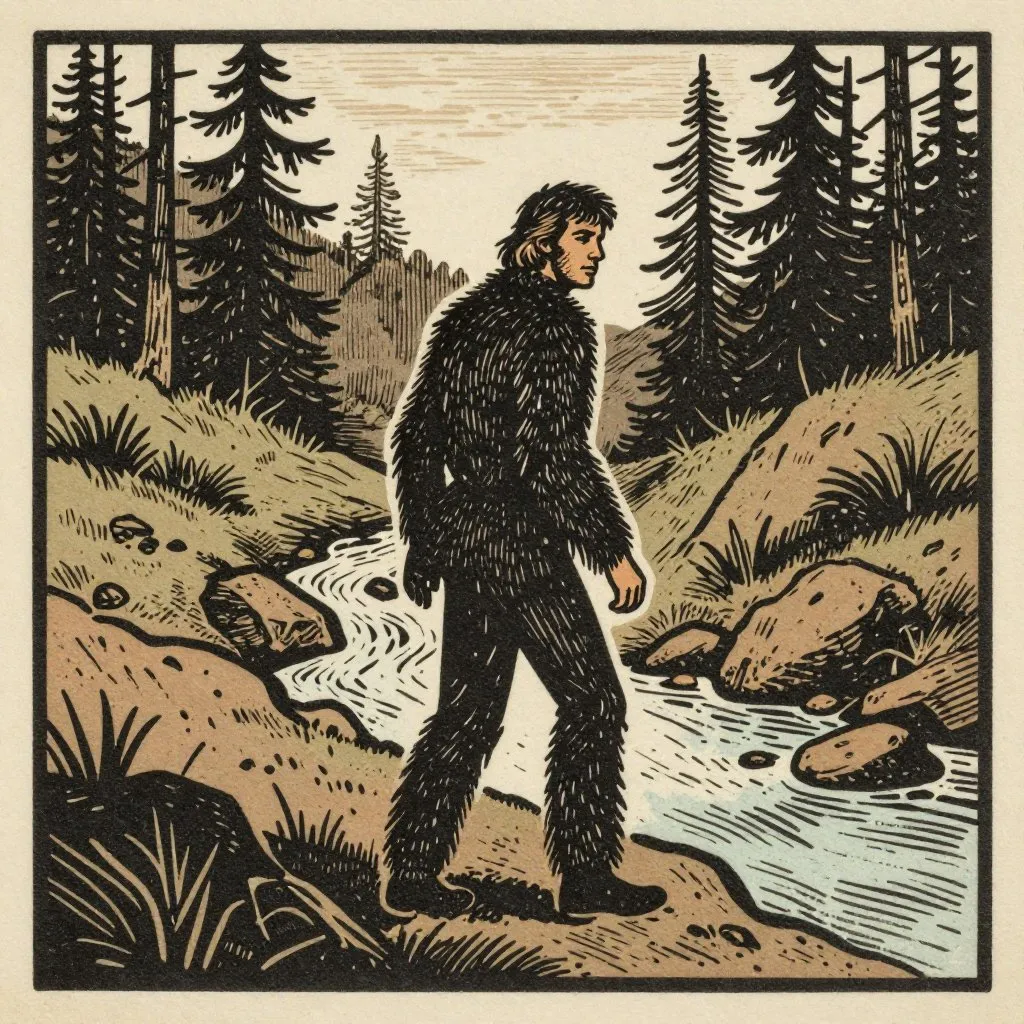
On October 20, 1967, they got what they came for. Patterson's horse spooked. Something was moving along the creek bed. Large. Upright. Covered in dark hair. Patterson grabbed his rented 16mm Kodak camera, fell off his horse, and started filming while running.
The footage lasts fifty-nine seconds. It is grainy. It is shaky. It was shot from approximately eighty feet away, which is close enough to be terrifying and far enough away to be useless as evidence. This is the Patterson-Gimlin film. It is the single most analyzed minute of amateur wildlife footage in history. Wars have been fought with less scrutiny than this home movie has received.
Frame 352 is the one everyone knows. The creature is mid-stride. Its right leg is forward. Its left arm is swinging. And it is looking back over its shoulder at the camera. The expression, insofar as a blurry figure can have an expression, reads something like resigned annoyance. Like a neighbor who just watched you photograph their recycling bins.
Patterson died in 1972 still insisting it was real. Gimlin stopped talking about it for decades, then started again. The footage has been studied by Hollywood effects artists, biomechanics professors, and the kind of people who pause VHS tapes frame by frame until the tracking goes bad. Nobody has proven it fake. Nobody has proven it real. The film just sits there, fifty-nine seconds of something, daring anyone to make a definitive statement.
The Naming Problem
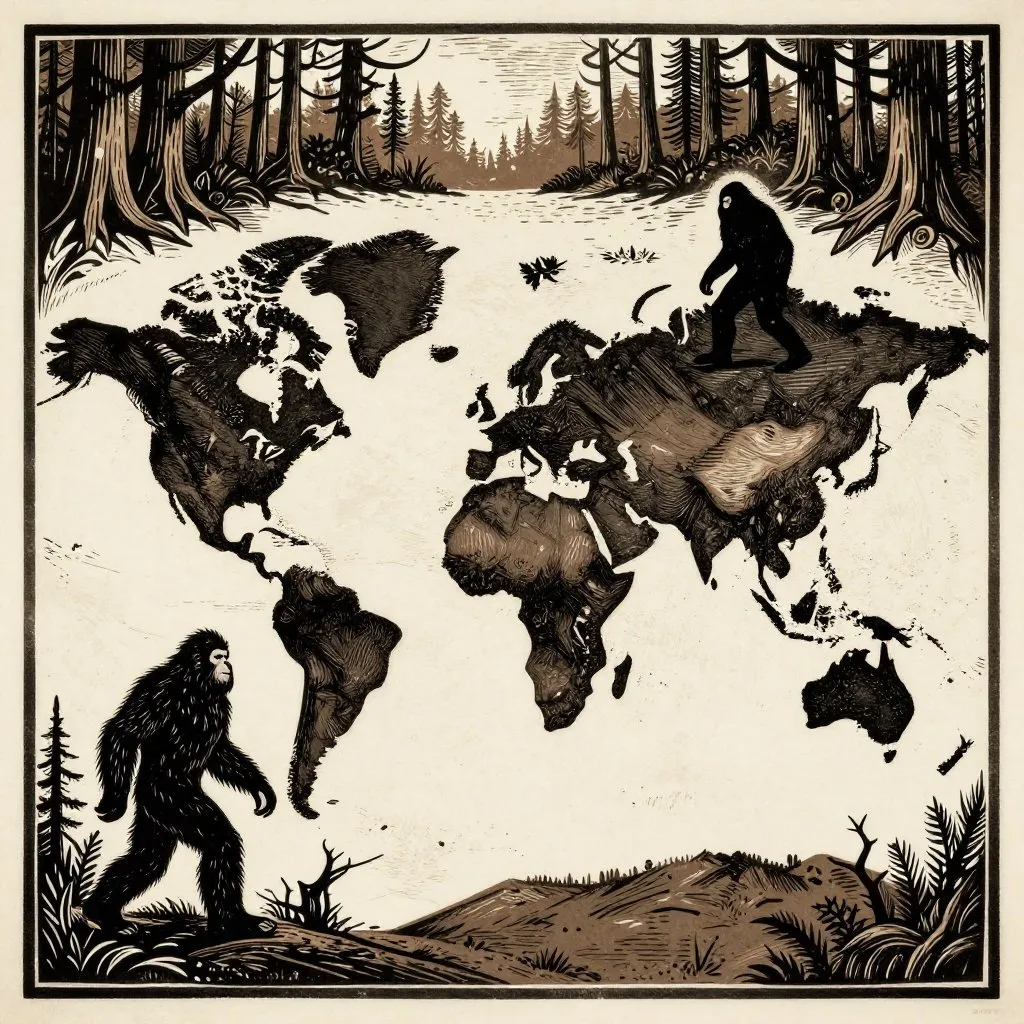
Here is a thing about large, unverified forest creatures: every culture that has forests has one.
In the Pacific Northwest, the Lummi people have Ts'emekwes. The Sts'ailes people of British Columbia have Sasquatch, from "sasq'ets" in the Halkomelem language, meaning "wild man" or "hairy man." These stories go back centuries. Long before Jerry Crew and his plaster. Long before Roger Patterson and his rented camera. The creature was already old news when white settlers showed up and acted like they discovered it.
In the Himalayas, the Yeti fills a similar role. In Australia, the Yowie. In the Caucasus Mountains, the Almasty. In Sumatra, Orang Pendek. Each one is slightly different in the details, but the pitch is the same: something large and humanoid lives in the woods, and it does not want to be found. If this were a franchise, it would be the most successful one on earth. Consistent branding across six continents.
The scientific community has been less enthusiastic about naming it. Gigantopithecus, a genus of giant ape that went extinct roughly 300,000 years ago, gets mentioned when researchers are feeling generous. "Misidentified bear" gets mentioned when they are not. Cryptozoologists, the scientists that other scientists don't invite to conferences, have made Bigfoot their entire professional identity. Camping supply companies have made it their mascot. Gift shops from Oregon to British Columbia sell more Bigfoot merchandise than the creature has ever sold evidence of its own existence.
The Evidence Locker

The case for Bigfoot lives in a filing cabinet with four drawers, and every one of them has problems.
Drawer one: footprints. Thousands of them, found across the Pacific Northwest over the last seventy years. They range in size from fourteen to twenty-four inches. Some show dermal ridges, which are the primate equivalent of fingerprints. A physical anthropologist named Jeff Meldrum at Idaho State University has collected over two hundred casts. He believes they show anatomical consistency across decades and geography. His colleagues believe he should maybe study something else. He has not taken their advice.
Drawer two: hair samples. Collected from bark, branches, fences, and locations described in field reports as "suspicious." Over the decades, hundreds of samples have been sent to labs. In 2014, a geneticist named Bryan Sykes at Oxford published results from thirty-six Bigfoot and Yeti hair samples collected worldwide. Every single one belonged to a known animal. Bears, mostly. Also horses, cows, raccoons, and, in two cases, humans. The humans were not identified but are presumably still out there, rubbing against trees for reasons they have chosen not to share publicly.
Drawer three: audio. The Sierra Sounds, recorded in the Sierra Nevada mountains in the early 1970s by a journalist named Ron Morehead, feature howls, screams, and what some researchers describe as a structured vocalization pattern. A language, possibly. Others describe it as two guys in the woods with a tape recorder making noises. The recordings have been analyzed by a Navy linguist who found "ichthyological patterns." Which, and I cannot stress this enough, means fish patterns. In a forest. From something that isn't a fish.
Drawer four: sightings. Over ten thousand reported in North America. The Bigfoot Field Researchers Organization maintains a database. Washington, Oregon, and California lead the count. Not one sighting has produced a clear, unambiguous photograph. Every image is blurry, distant, partially obscured, or taken by someone whose hands apparently stop working the moment they see something important. Bigfoot is the most documented creature on earth that does not technically exist.
The Confession
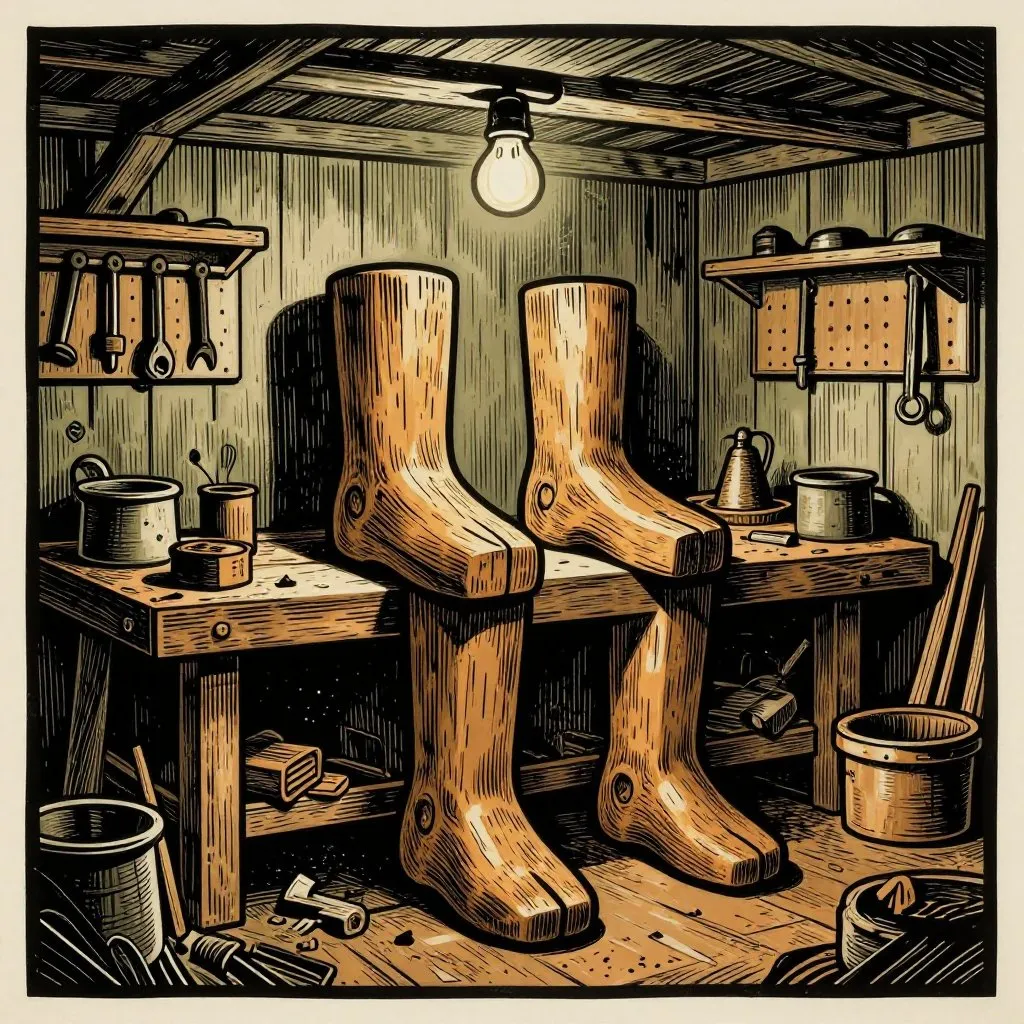
Ray Wallace was a construction contractor who worked in the logging roads around Bluff Creek in the 1950s. He was also, by all accounts, a prankster. The kind of person who found things funnier the longer they went on.
In 2002, Ray Wallace died. His family had something to share. Those original 1958 footprints, the ones Jerry Crew found, the ones that made the newspaper, the ones that gave the creature its name: Ray made them. He had carved oversized feet out of alder wood. Sixteen inches. He strapped them to his boots and walked around the job site after hours, pressing deep tracks into the mud. Then he went home and presumably slept very well.
The wooden feet were produced. Photographs were shown. The family was not apologetic. Ray thought it was hilarious. He had watched an entire country lose its mind over footprints he made in his garage, and he kept the secret for forty-four years. That is not a prank. That is a lifestyle.
This should have ended the story. A reasonable society would have taken the confession, closed the file, and moved on to worrying about something else. That is not what happened. The Bigfoot community absorbed the revelation the way a lake absorbs a pebble. Small ripple. Brief pause. Then the water goes flat and everyone picks up exactly where they left off. The argument was simple: Ray Wallace faked some prints. That does not mean all prints are fake. One forged painting does not mean the Louvre is empty. He was right, technically. But "technically right" is doing a lot of heavy lifting in that sentence.
Still Out There (Probably Not)
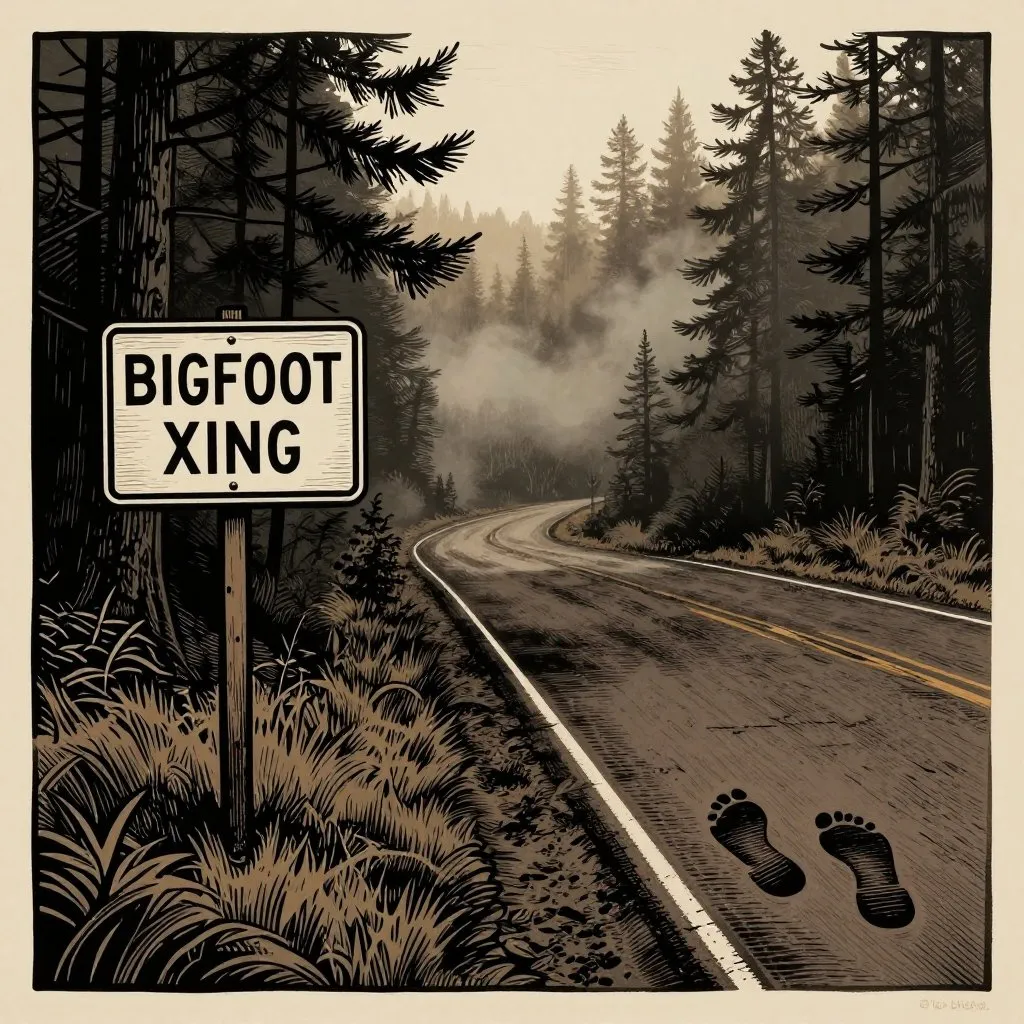
In 1969, Skamania County, Washington passed Ordinance 69-01. It made killing a Bigfoot a felony, punishable by five years in prison and a ten-thousand-dollar fine. They amended it in 1984 to reclassify the offense as a gross misdemeanor, which suggests that someone on the county board felt the original penalty was too harsh for shooting a creature that probably doesn't exist. This is government at its finest.
Willow Creek, California, the town closest to Bluff Creek, hosts an annual Bigfoot festival. There is a Bigfoot museum. There are Bigfoot gift shops. The town leans into it the way Roswell, New Mexico leans into aliens, which is to say: completely, commercially, and with a straight face at the cash register. Drive through the Pacific Northwest and you will find Bigfoot on beer labels, trail markers, motel signs, bumper stickers, and at least one local news broadcast per sweeps week.
No body has ever been recovered. No bones. No teeth. No scat. No definitive DNA. Sixty-eight years of searching and the best evidence is still a minute of shaky film and some plaster casts in a professor's office. The rational conclusion is obvious.
But the woods are very large. And very quiet. And every now and then, someone walks out of them with a look on their face that is hard to fake. They saw something. They don't know what. They are not asking you to believe them. They are just telling you what happened, and then they go very quiet, and they don't go back to that part of the trail. Bigfoot's greatest skill was never hiding. It was being just plausible enough that the file never quite closes.
Field Notes
- The Patterson-Gimlin film, shot October 20, 1967 near Bluff Creek, California, remains the most analyzed piece of alleged Bigfoot evidence. No one has definitively proven it real or fake.
- Skamania County, Washington passed Ordinance 69-01 in 1969, making it illegal to kill a Bigfoot. The penalty: up to five years in prison and a $10,000 fine.
- The word "Sasquatch" derives from "sasq'ets" in the Halkomelem language of the Coast Salish peoples of British Columbia.
- The Bigfoot Field Researchers Organization (BFRO) maintains a database of over 5,000 reported sightings across North America, with the highest concentrations in Washington, Oregon, and California.
- In 2014, a study published in the Proceedings of the Royal Society B analyzed 36 alleged Bigfoot and Yeti hair samples using DNA sequencing. Every sample was identified as a known animal: bears, cows, horses, raccoons, and humans.
Dig Deeper
Want the facts behind the folklore? Explore the real history of Bigfoot sightings, evidence, and cultural impact.
Learn more about Bigfoot