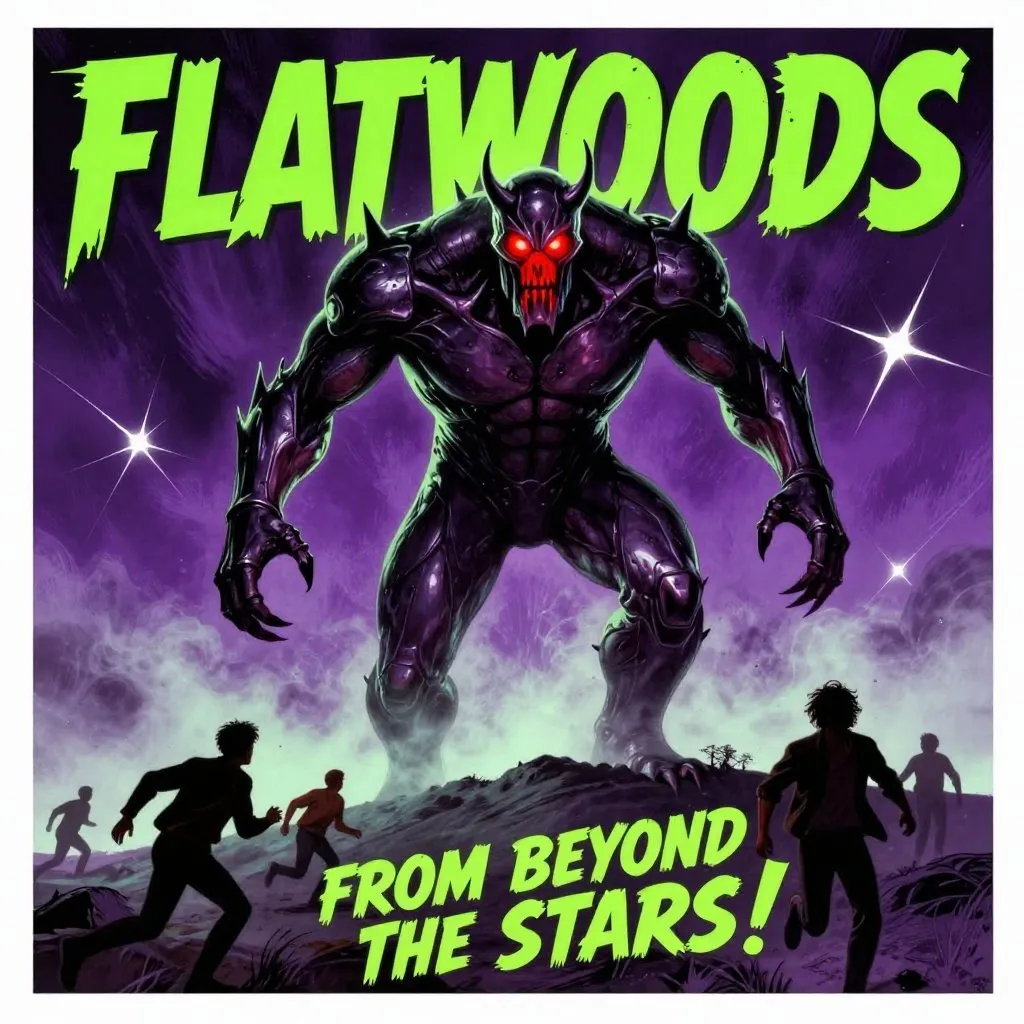
The Light on the Hill
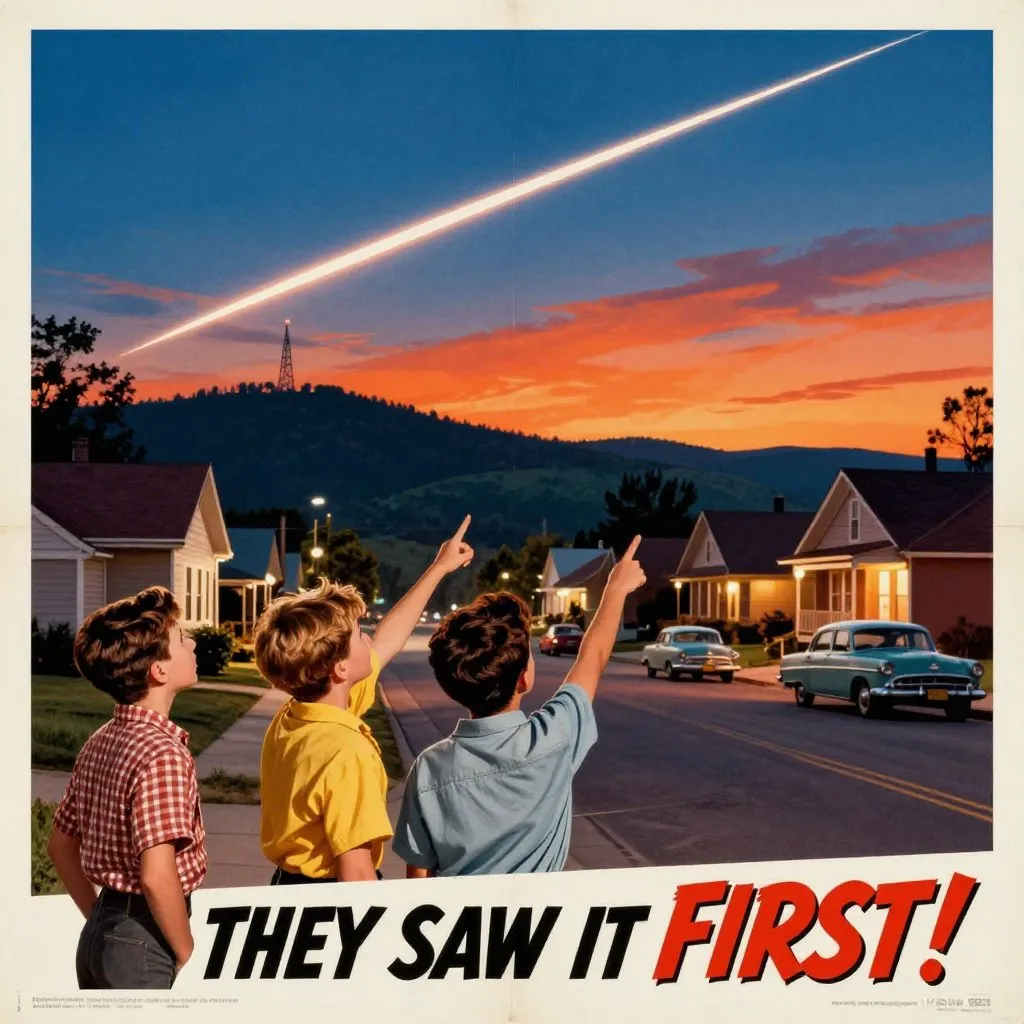
On the evening of September 12, 1952, three boys in Flatwoods, West Virginia watched a bright object cross the sky and land on a hilltop above town. The year was important. The country was eighteen months into the Korean War, six weeks past the Soviet Union testing its second hydrogen bomb, and seven years into an era when people were already looking at the sky with the specific anxiety of people who had seen what humanity was capable of. Something unusual in the sky was not a curiosity in 1952. It was a question with bad possible answers.
This was also the peak of what investigators later called the 1952 UFO wave. Between June and September of that year, hundreds of sightings were reported across the eastern United States. Radar contacts appeared over Washington, D.C. twice in two weeks, and the Air Force held its largest press conference since World War II to explain them. The explanation did not stick. The country was in a mood, and the mood was: something is up there and nobody is telling us what it is.
The boys, being boys in 1952 in a small West Virginia town, did the obvious thing. They went to get help.
The Group Decision
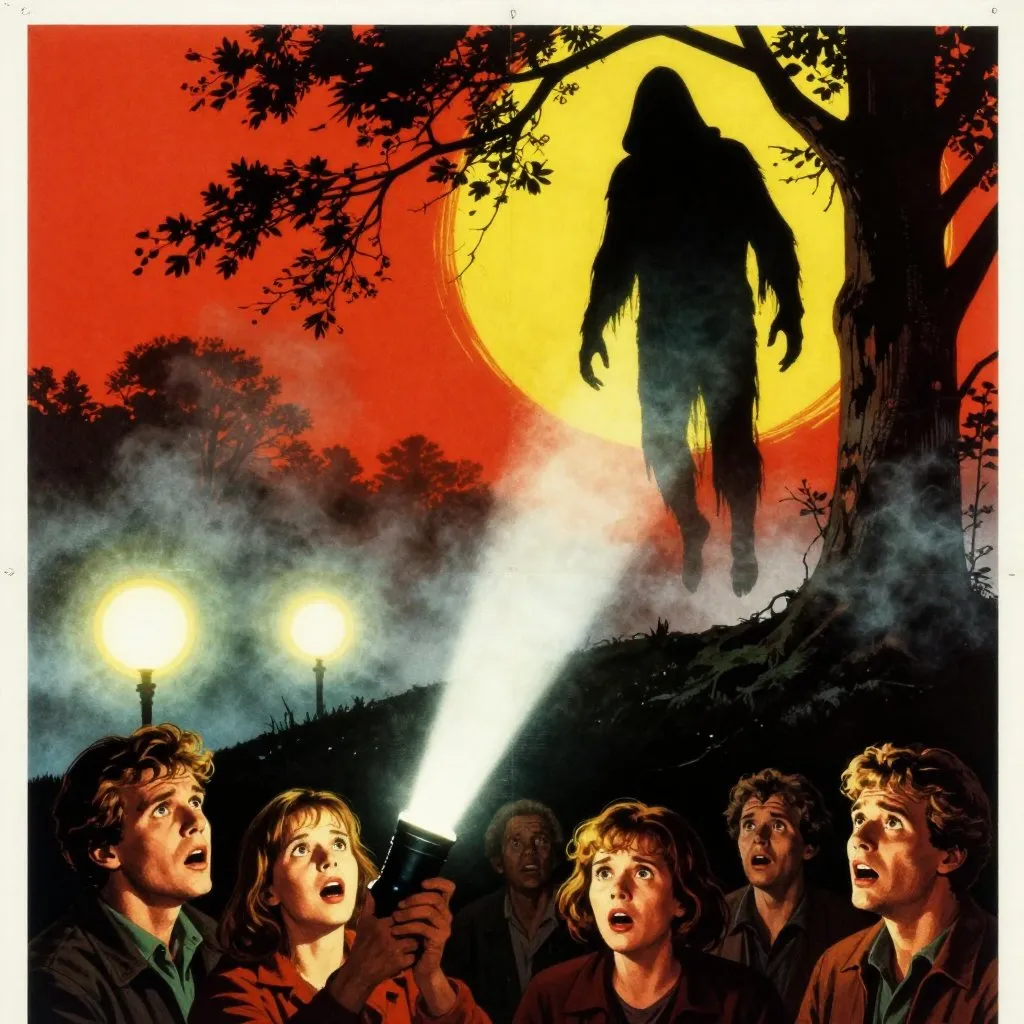
Kathleen May was the mother of two of the boys. She lived nearby, which made her the logical first stop, and she was apparently not the kind of person who responded to her children's descriptions of crashed UFOs with "go wash up for dinner." She grabbed a flashlight. She collected several more children who were in the vicinity. And then Eugene Lemon walked in, a seventeen-year-old National Guardsman who happened to be visiting.
Lemon was, by any reasonable measure, the adult supervision in this situation. He was the oldest. He had military training. He had, presumably, been taught the importance of conducting reconnaissance carefully before walking directly toward unknown objects that had just fallen from the sky. He took point, carrying the flashlight.
The group, now seven people, headed up the hill toward whatever had landed on the farm of a man named G. Bailey Fisher. It was nearly dark. The hill was wooded. None of them knew what they were walking toward, and they all went anyway, because this is what people do in small towns at dusk when something lands on a neighbor's property. You don't call someone. You go look.
The Encounter

At the top of the hill, the smell hit them first. It was metallic, acrid, like something electrical burning, combined with something sulfurous, like a match head but heavier. The air was misted. There was a pulsing red glow coming from a point in the dark ahead of them.
Lemon pointed the flashlight toward the glow. Two smaller orbs reflected back from near the base of a large oak tree. Animal eyes, was the first thought, the rational thought. Then the flashlight caught the rest.
It was at least ten feet tall. Its face was round and red, lit from within, framed by a pointed shape that rose above it like a hood or a cowl. Below the face, the body was dark, almost metallic in texture, and it did not stand the way a living thing stands. It hovered. It moved toward them without the mechanics of walking, a gliding forward momentum with no visible effort, while making a low hissing sound that none of them could describe precisely afterward except to say it was wrong. The smell intensified to something that later witnesses would struggle to put into words: burning metal and sulfur and something else, something with no good comparison. Lemon dropped the flashlight. The group ran. Every single one of them, including the National Guardsman, turned and went back down that hill as fast as a human being can manage in the dark.
The Aftermath
The group made it back to town and reported the encounter to anyone who would listen, which turned out to be everyone. Several of them were not well. Nausea. Vomiting. Throat irritation that lasted for days. Kathleen May gave a description of the creature that she would repeat, consistently and without variation, for the rest of her life. She appeared on a national television program called "We the People" within weeks of the encounter and described it calmly, clearly, in the specific detail of someone reporting something that had actually happened. Eugene Lemon, a National Guardsman with presumably some experience in keeping his composure, corroborated everything.
A. Lee Stewart Jr., co-owner of the Braxton Democrat, went to the site that same night. He found skid marks in the grass. He found the smell, which he described as "sickening." He did not find the creature, which had apparently finished whatever it came to do and departed on its own schedule. His report ran the next morning.
By the following day, Flatwoods had a problem it had never anticipated. The town had a population of about 300 people. Reporters from national newspapers and radio stations were arriving faster than the town could absorb them. There was no hotel. There was one diner. There was a hardware store and a church and a gas station and the hill, which was now the most famous hill in West Virginia, and none of the 300 residents of Flatwoods had done anything to make it famous except go look at something they probably should have left alone.
The Investigation
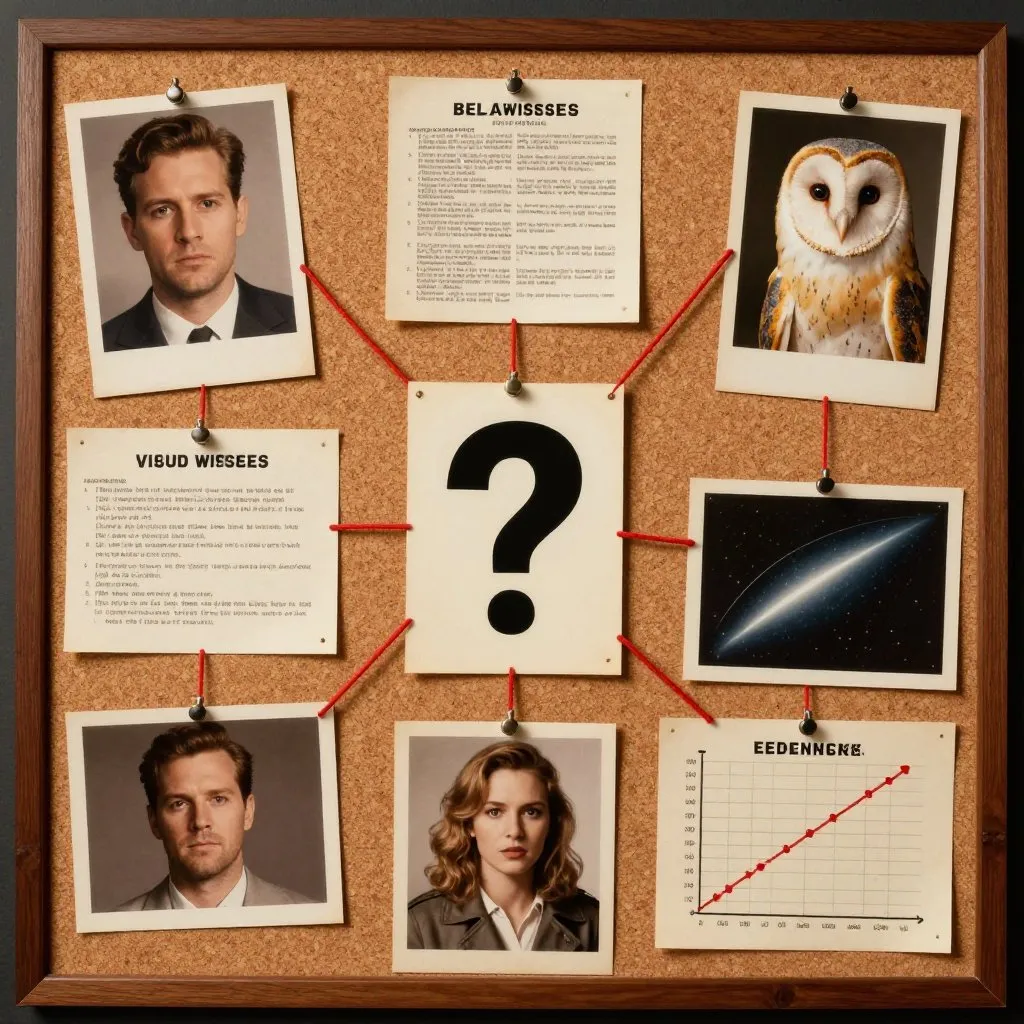
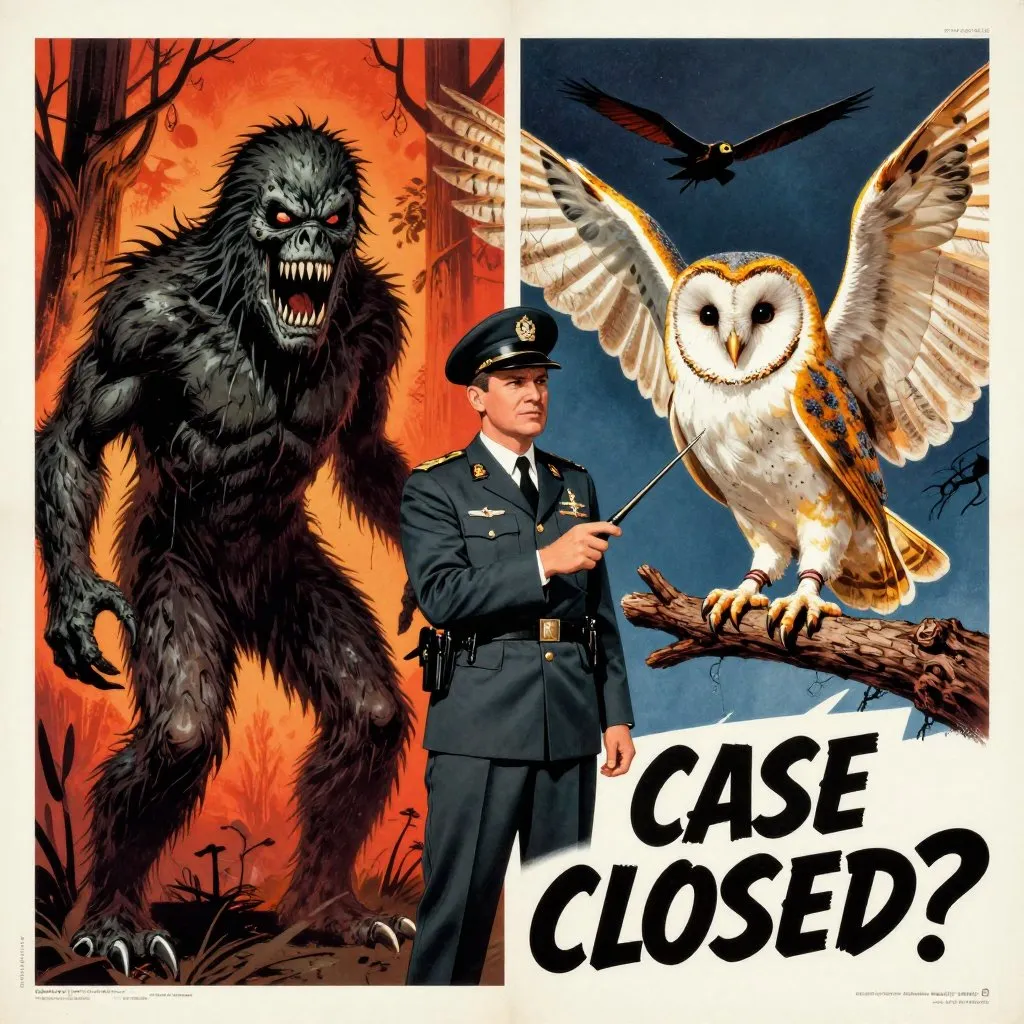
The Air Force, under its official UFO study program Project Blue Book, looked into the case. Their conclusion: the object in the sky was a meteor, and the creature was a barn owl. A barn owl in a tree, they explained, has reflective eyes that can appear to glow in flashlight. A barn owl startled from a branch launches upward, spreading its wings, and from below that silhouette could suggest a larger, hooded form. The smell was from industrial sources in the area, unrelated to the sighting. The physical symptoms experienced by the witnesses were psychosomatic, produced by fear.
This explanation is not impossible. It is, however, a lot to ask. The barn owl that Project Blue Book had in mind would need to have been approximately ten feet tall, capable of producing a smell that a newspaper editor independently confirmed the following morning, and able to hover and advance on a group of people in a way that its own species has never documented doing. Barn owls top out at about eighteen inches. The hover would have been a new trick.
Blue Book closed the Flatwoods case as "explained." It was a pattern for Blue Book, which ran from 1952 to 1969, investigated 12,618 UFO reports, and concluded 701 of them were "unidentified." The other 11,917 were, by official determination, things people had already seen before. Barn owls. Weather balloons. The planet Venus, which turned out to be responsible for more Cold War panic than anyone expected. Blue Book was not wrong that people misidentify things. It was sometimes aggressive about applying that principle to cases where the facts were inconvenient.
The Legacy
Skeptic Joe Nickell revisited the Flatwoods case in 2000 and largely agreed with Blue Book. He added that the "hovering" motion was consistent with an owl launching from a branch in a startled updraft. He suggested the group's fear responses amplified their perceptions into something more extreme than what was actually there. He offered this analysis thoughtfully, with evidence, and it is genuinely reasonable.
The problem is that it remains unsatisfying in the specific way that rational explanations for multi-witness events tend to be unsatisfying. Seven people. All of them sick for days afterward. A journalist who confirmed the physical evidence on the scene that same night, hours before the story had time to grow. Kathleen May's account, unchanged across five decades of interviews, through the attention and the skepticism and the television appearances and the long years after when no one was asking anymore. Owls do not make people vomit. Fear can, but usually not for three days, and usually not independently across multiple witnesses who have been separated and interviewed individually. The skeptic's argument is better than no argument. It is not quite good enough.
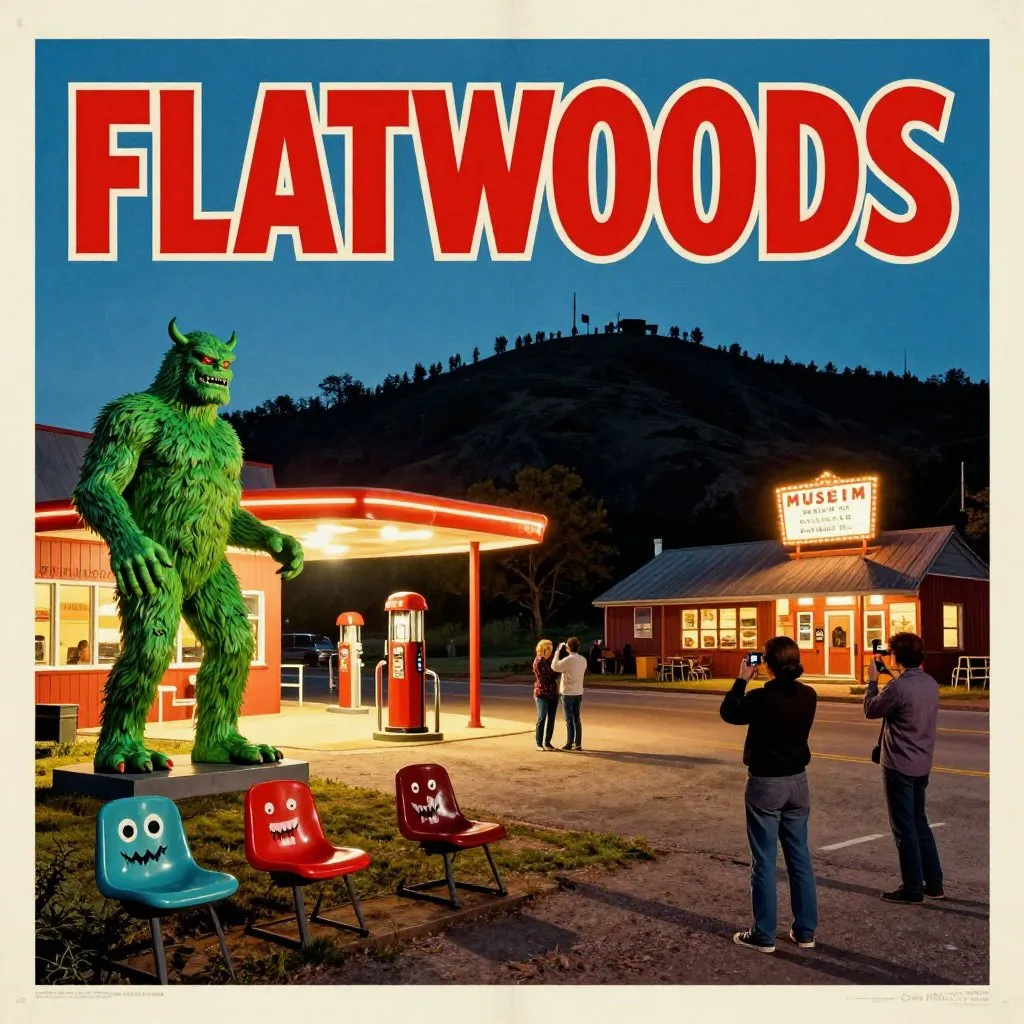
Flatwoods, West Virginia, population still roughly 300, has arrived at the only sensible conclusion: the monster is an asset. The town has a Flatwoods Monster Museum. It has a gift shop. Along the main road there are chairs shaped like the creature, which is not something you expect to see and is funnier than it has any right to be. A large green statue of the monster stands at a local gas station. The annual Flatwoods Monster Festival draws visitors from states away, people who have driven to a small West Virginia town specifically to stand in the approximate vicinity of a hill where something frightening happened for thirty seconds in 1952. The creature appeared once, glided forward about twenty feet, and left. In doing so it gave a town of 300 people something that most towns of 300 people never get: a reason for anyone to show up. Seventy-plus years later, the t-shirts are still moving. Not bad for an owl.
Field Notes
- The Flatwoods Monster encounter occurred on September 12, 1952, on a hilltop near Flatwoods, Braxton County, West Virginia. The primary witnesses were Kathleen May, her sons Eddie and Freddie, their friends Tommy Hyer and Neal Nunley, and National Guardsman Eugene Lemon.
- The 1952 UFO wave was the largest mass UFO sighting event in American history. Between June and September 1952, hundreds of sightings were reported, including radar contacts over Washington, D.C. that prompted the Air Force to hold its largest press conference since World War II.
- The U.S. Air Force's Project Blue Book (1952-1969) investigated 12,618 UFO reports. The Flatwoods incident was classified as "explained," attributed to a meteor and a barn owl. Blue Book concluded that 701 of its total cases remained "unidentified."
- The Flatwoods Monster's distinctive spade-shaped "head" has made it one of the most recognizable cryptids in popular culture, particularly in Japan, where it is known as the "3-Meter Alien" (3-metoru no uchujin) and appears frequently in manga, anime, and video games.
- Kathleen May appeared on the television program "We the People" shortly after the encounter and maintained her account consistently until her death in 2009. Her descriptions never varied significantly across decades of interviews.
Dig Deeper
Want the facts behind the folklore? Explore the real history of the Flatwoods Monster and the 1952 UFO wave.
Learn more about the Flatwoods Monster