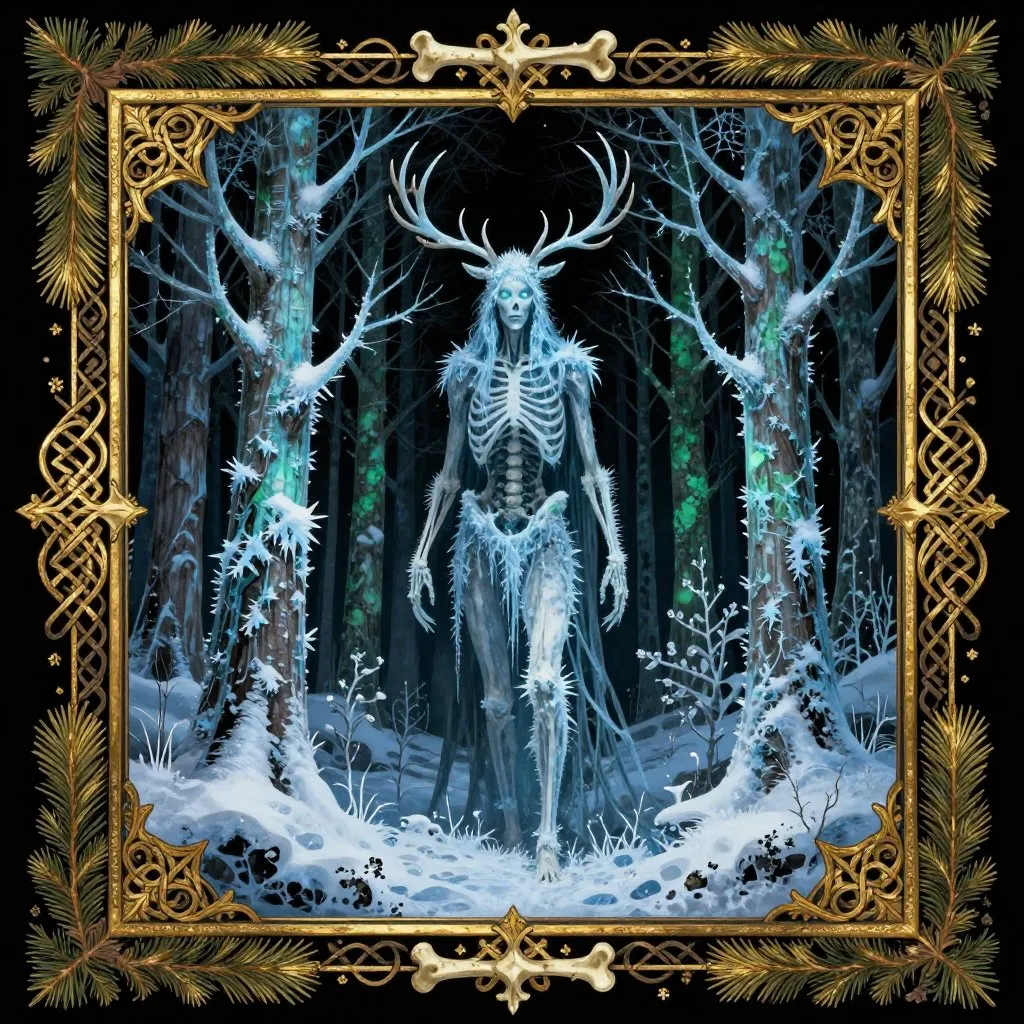
The Name
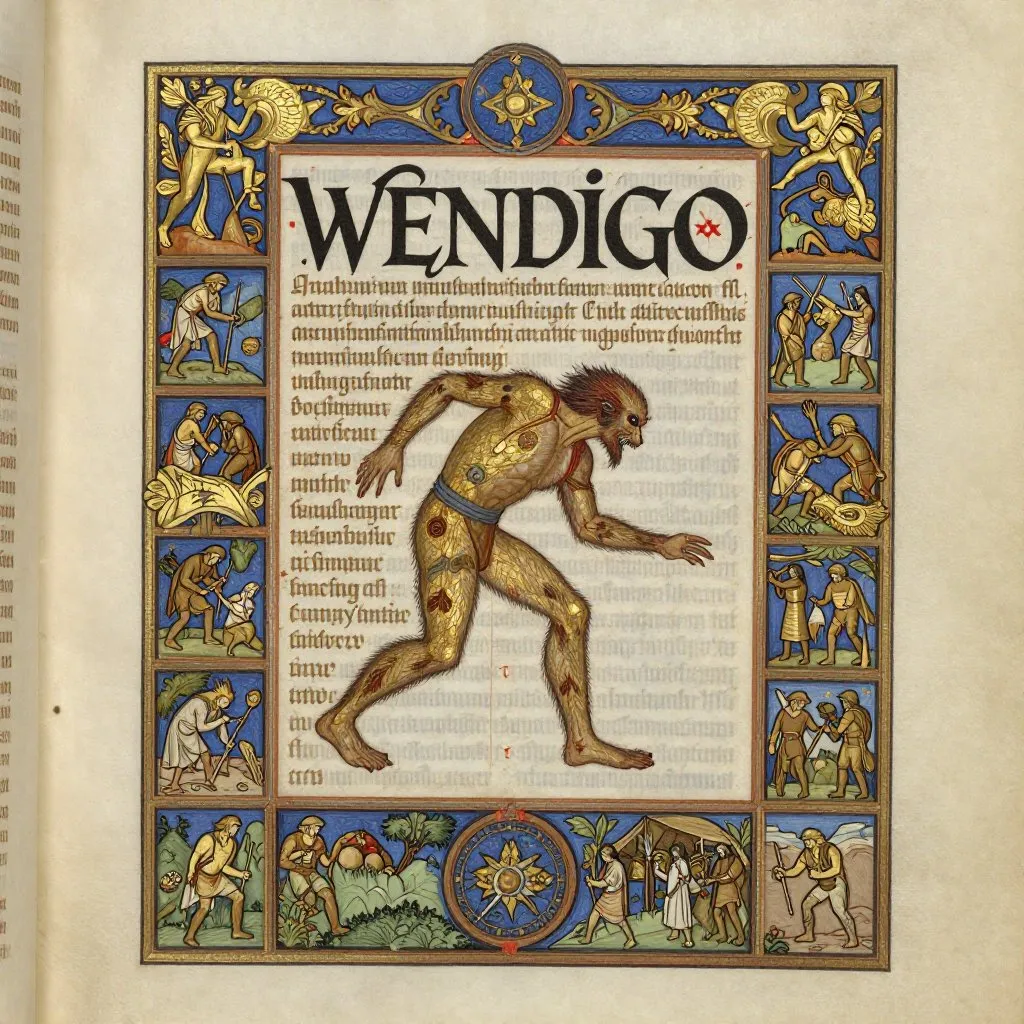
The word comes from the Algonquian language family. Wendigo, windigo, witiko. The spelling shifts depending on who is writing it down, which is what happens when a word moves across languages it was never meant to live in. The meaning holds more steady: an evil spirit. A creature of insatiable hunger. A being that began as human and became something that should not exist.
This is not a monster story in the way you are probably expecting. The Wendigo belongs to the Algonquian, Ojibwe, and Cree traditions, and in those traditions it is not a creature that hunts from the outside. It is a warning about what can happen on the inside. It represents greed, selfishness, and the act that cannot be undone: cannibalism. The Wendigo does not come for communities. It comes from them.
That distinction matters. A wolf in the forest is frightening. A neighbor at the table is something else entirely.
The Transformation
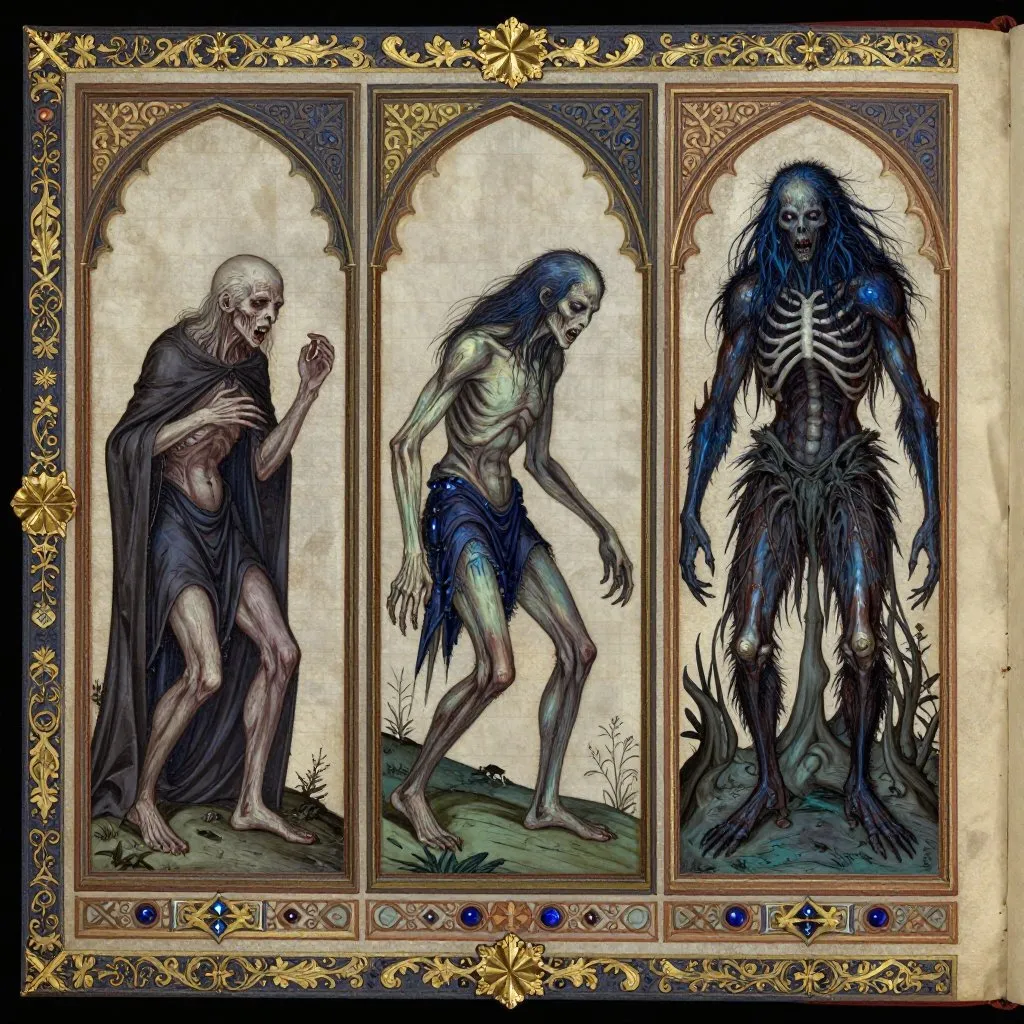
A person becomes a Wendigo through an act of cannibalism. In the stories, this almost always happens in winter, when starvation has narrowed every choice down to one impossible question. The transformation does not arrive all at once. It begins as hunger. Not ordinary hunger, but a specific, deepening kind that eating does not touch. The person eats. The hunger gets worse.
The body follows. It stretches upward, grows thin, the skin pulling tight across bones that seem to lengthen by the day. The eyes hollow. The smell of cold decay arrives and does not leave. What remains is still recognizable as the thing it came from, the same way a burned house is still recognizable as a house. The outline is there. The rest is gone.
The Wendigo is always cold. It is always hungry. It will always be both of those things, because it has passed the point where food is the answer.
The Winter
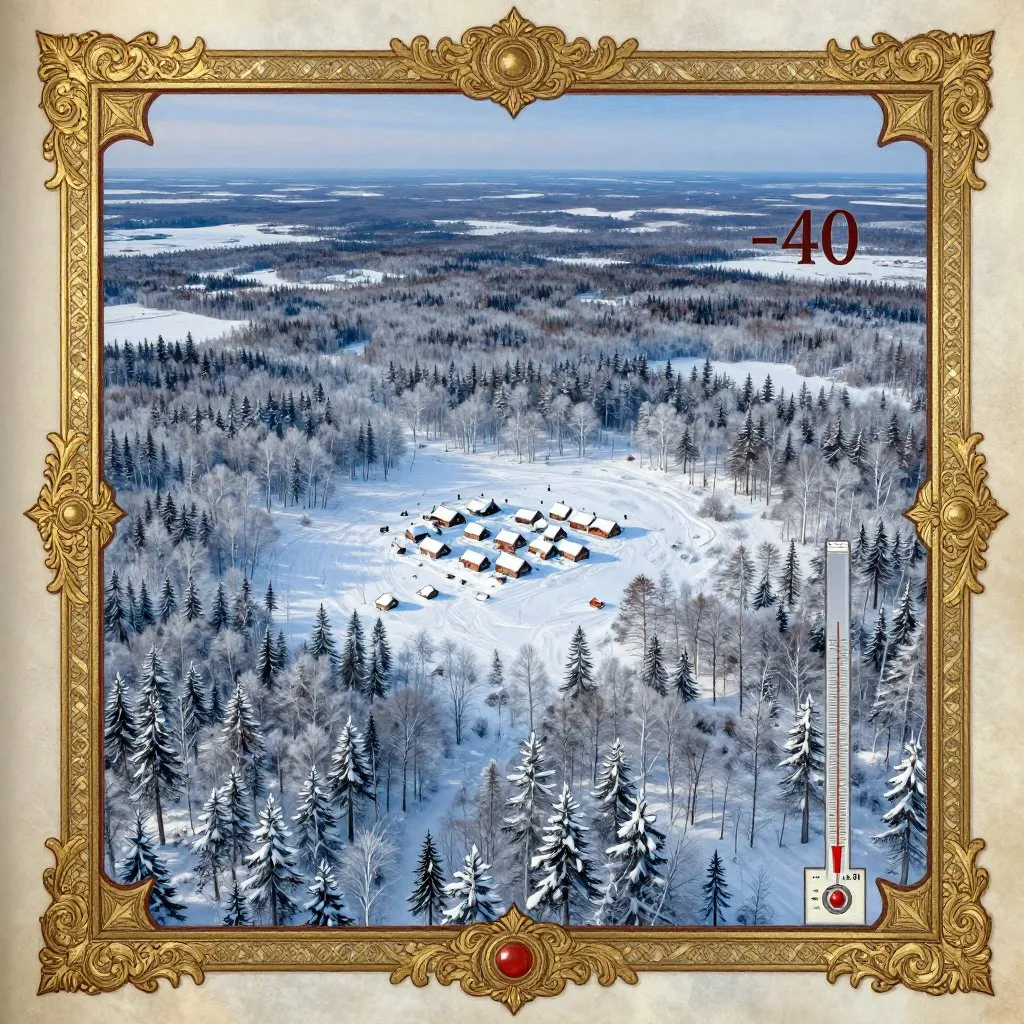
To understand where this legend lives, you have to spend some time with the geography.
The boreal forests of northern Canada stretch for millions of acres. In January, temperatures fall below negative 40 degrees Fahrenheit. This is also negative 40 degrees Celsius. The two scales meet at that number, which is the kind of fact that sounds like a coincidence until you are standing in it. Snow buries the trails. Hunting fails. Stored food does not last as long as winter does. Communities that could not reach other communities had no one to reach.
This is the world that produced the Wendigo. Not a world of campfire stories told for entertainment, but a world of genuine, grinding risk. The legend was not decoration. It was a boundary drawn around the worst thing a community could imagine doing to itself, made into a creature so that the boundary would hold. When people ask why the Wendigo is so frightening, the honest answer is: because it was supposed to be.
Wendigo Psychosis
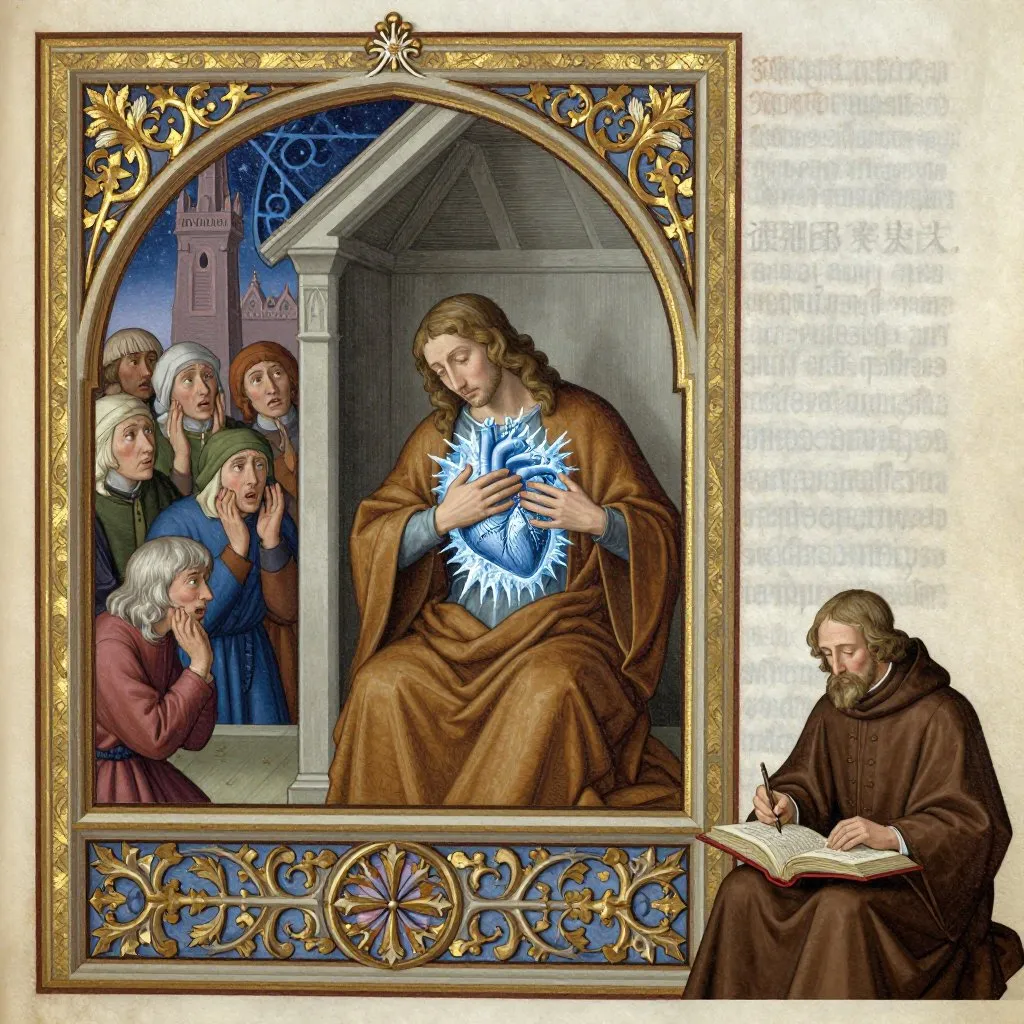
In 1661, Jesuit missionaries writing in the Jesuit Relations recorded something that stopped them. People among the Algonquin were reporting that they were changing. An uncontrollable craving for human flesh. A feeling of growing larger. Ice forming, slowly, around the heart. Some of them asked to be killed before it was complete. They asked this clearly, while they still could.
Western psychiatry eventually filed this under "Wendigo psychosis," a culture-bound syndrome. The debate about what it actually was has continued for three hundred years. Some researchers took it seriously as a distinct condition. Others argued it was something already known, grief, psychosis, starvation-induced derangement, filtered through a cultural framework that gave it a different name. Neither side has fully convinced the other.
What is not in dispute is this: the people who experienced it believed it absolutely. They experienced real terror, real physical symptoms, and real certainty that they were becoming something they did not want to become. Whether the clinical category fits or not, the experience was not nothing. It was not imagined in the dismissive sense of that word. It was, by every account, very real to the people living inside it.
The Trials

Jack Fiddler was a Cree chief and medicine man from the Sucker clan, in northwestern Ontario. He reported having killed fourteen Wendigos across his lifetime. This was understood within his community as the work of a protector.
In 1907, Canadian authorities arrested him for murder. The woman he had killed, he maintained, had been turning. He had done what needed to be done. He died in custody before his case went to trial.
The collision here was not between truth and fiction. It was between two legal systems, each internally coherent, that had no common language. One system recognized Wendigo transformation as a real and lethal event requiring intervention. The other recognized only the act of killing and the absence of a defense it could process. Neither court, neither framework, had the tools to fully see what the other was describing. Jack Fiddler died in that gap. It is the kind of historical case that resists resolution because the resolution would require one system to admit it was operating with an incomplete picture of reality, and legal systems are not built to do that.
The Appetite
The Wendigo has lasted because its center holds across time. Every era, every culture, has something that names the thing which consumes without limit. Greed. Addiction. Colonial extraction. The logic that says more is always better until it is all there is. The Wendigo is the shape that takes when consumption stops being a means and becomes the only point.
In the original stories, the Wendigo grows larger with every meal. Its body stretches to fit its hunger, so the hunger never shrinks in proportion. There is no full. There is only the next. This was not written as metaphor. It was written as warning, specific and practical, for communities that had seen what winter could do to people and wanted a story strong enough to hold the line.
The boreal forests are still cold. The winters are still long. The warning is still the oldest one in North American mythology, and it has not gotten easier to argue with: be careful what you feed. The things you feed grow. And some of them, once grown, do not stop.
Field Notes
- The Wendigo is a figure from the mythology of several Algonquian-speaking peoples, including the Ojibwe, Cree, Naskapi, and Innu. It is primarily associated with the boreal forests and Great Lakes region of Canada and the northern United States.
- "Wendigo psychosis" was documented in ethnographic and psychiatric literature from the 17th through 20th centuries, described as a culture-bound syndrome involving intense cravings for human flesh and the belief in personal transformation into a Wendigo. Its classification remains debated among anthropologists.
- Jack Fiddler (Zhauwuno-geezhigo-gaubow), a Cree chief from the Sucker clan, was arrested in 1907 at Sandy Lake, Ontario for the killing of a woman he claimed was turning into a Wendigo. He reported having killed 14 Wendigos in total during his career as a community protector.
- The Jesuit Relations, a collection of annual reports from Jesuit missionaries in New France (1632-1673), contain multiple references to Wendigo beliefs among Indigenous communities, providing some of the earliest written documentation of the legend.
- The Wendigo has become a prominent figure in modern horror media, appearing in works ranging from Algernon Blackwood's 1910 short story "The Wendigo" to the 2015 video game "Until Dawn." Many First Nations communities have expressed concern about cultural appropriation and the distortion of the Wendigo's original spiritual significance.
Dig Deeper
Want the facts behind the folklore? Explore the real cultural history and significance of the Wendigo.
Learn more about the Wendigo