The Goats

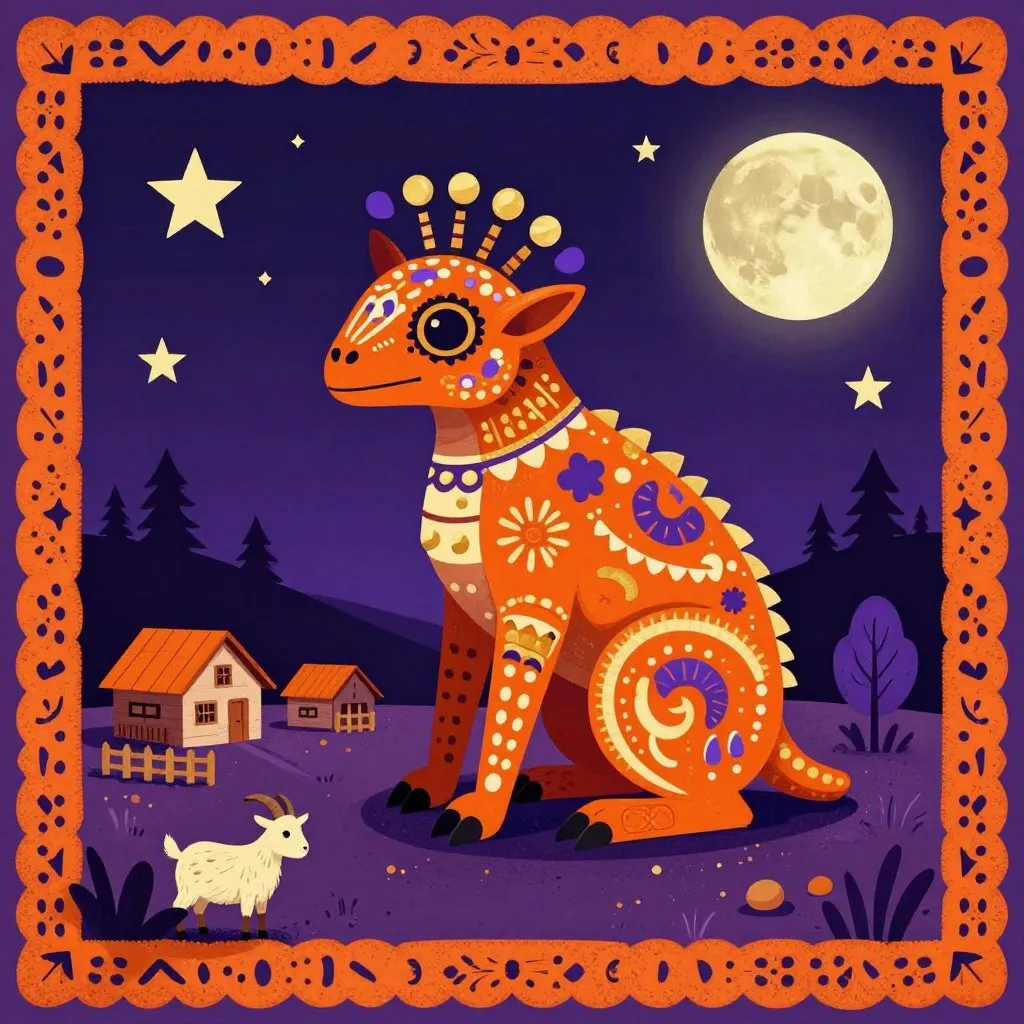
In March 1995, eight sheep turned up dead on a farm in Moca, Puerto Rico. Not mauled. Not dragged off. Just dead, each one marked with three small puncture wounds, each one drained of blood as though the blood were the point. No tracks in the mud. No signs of a struggle. Whatever did this arrived, did what it came to do, and left. It was tidy. Professionally tidy, which is not a quality you typically associate with a creature stalking rural farmland.
Word spread across the island the way only bad news can, which is to say: immediately and with editorial embellishment. Within weeks, goats, chickens, and rabbits were turning up the same way. Three puncture wounds. No blood. The animal had a system, and the system was working. Puerto Rican farmers compared notes, reached a consensus, and gave it a name: El Chupacabra. The goat-sucker. They were not being poetic. The thing sucked goats, and they named it accordingly.
The mayor of Canovanas, a man named Jose "Chemo" Soto, organized armed citizen patrols. Over 150 farm animals had been reported dead by that point. He was not waiting for a committee. He took a cage trap into the woods personally, on multiple occasions, and came back empty-handed every time. El Chupacabra did not walk into cages. El Chupacabra had a prior engagement.
The Witness
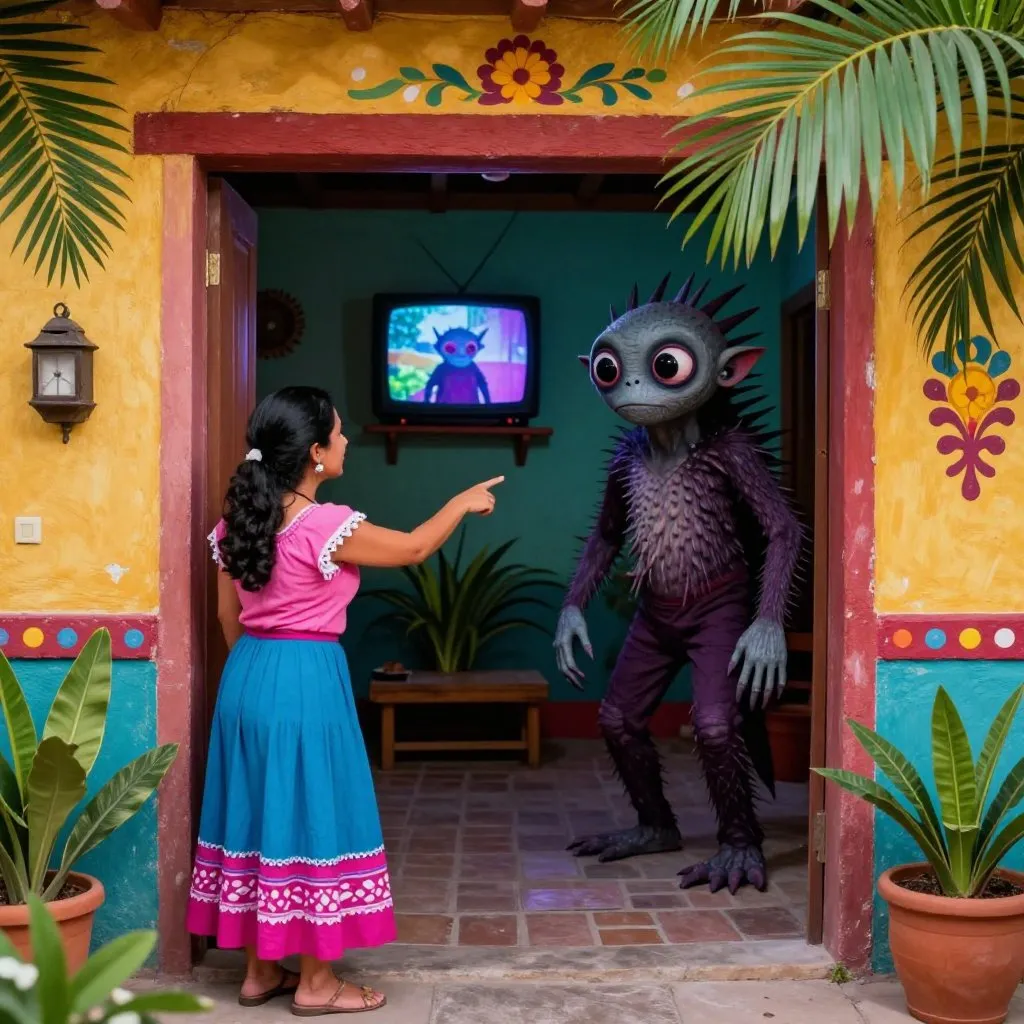
In August 1995, a woman named Madelyne Tolentino looked out her window in Canovanas and saw something that rearranged her understanding of what animals are supposed to look like. About four feet tall. Large, dark eyes that wrapped around the sides of its head. Gray, rough skin. A row of spines running down its back like a factory error. It was standing upright in her yard on two legs, which was already more than enough.
Her description became the blueprint. Newspapers printed it. Television segments used it. Artists illustrated it. The Chupacabra now had a face, and that face moved merchandise. Researcher Benjamin Radford spent five years investigating the Chupacabra, which is a very specific way to spend five years, and in 2011 he published his findings. Tolentino, it turned out, had recently seen the 1995 science fiction film "Species," whose alien antagonist was gray, spined, bipedal, and deeply unpleasant. The resemblance between Tolentino's Chupacabra and the film's creature was not subtle. Radford called it a direct visual influence.
This is either the most deflating footnote in cryptid history or a remarkable testament to the power of a good movie monster. The creature that panicked an island, inspired armed patrols, and launched a thousand newspaper stories may have had its face borrowed from a mid-budget sci-fi film. The Hollywood creature design team has never publicly commented. They should probably put it on their reel.
The Migration
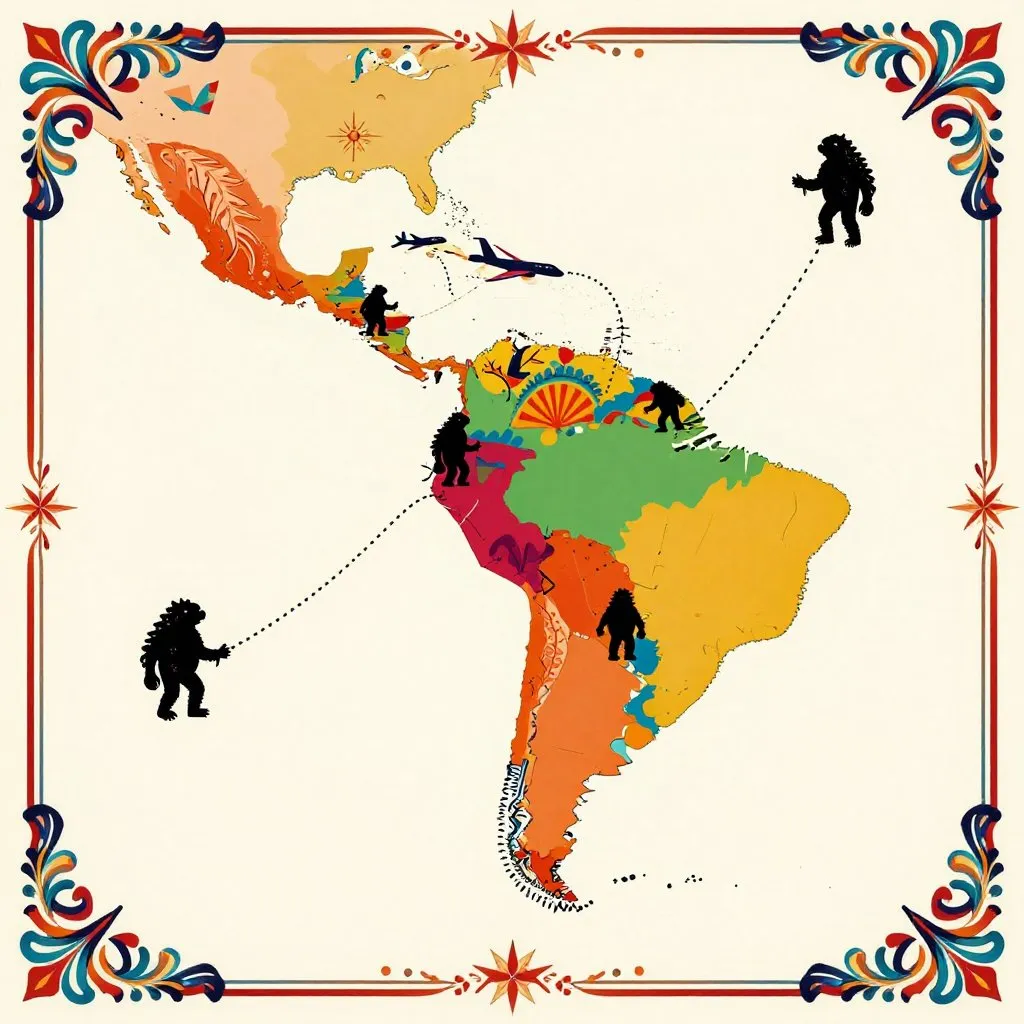
By 1996, El Chupacabra had left Puerto Rico and was apparently seeing the world. Reports came in from the Dominican Republic, Mexico, Argentina, Bolivia, Chile, Colombia, Honduras, El Salvador, Nicaragua, Panama, Peru, and Brazil. Then Texas. Then Florida. The creature had gone from a regional problem to an international incident in under a year, which is genuinely impressive for something without a passport.
Each country got its own version. Puerto Rico's Chupacabra was bipedal, spined, and science-fiction adjacent. Texas produced something more like a hairless dog, low to the ground, skulking at the edges of ranch properties. Chile landed somewhere in between, which is a sentence that should not make sense but does. Every community described what it expected a goat-sucking creature to look like, and those expectations varied significantly by region. The only consistent detail across every report, in every country, across three years of sightings, was the dead livestock.
The Chupacabra had become a kind of cultural mirror. Look at what it showed you, and you'd know exactly where you were standing. The Puerto Rican version was alien and strange and came from somewhere outside the known world. The Texas version was the kind of thing you might actually see on the side of a highway at two in the morning, and wish you hadn't.
The Suspects
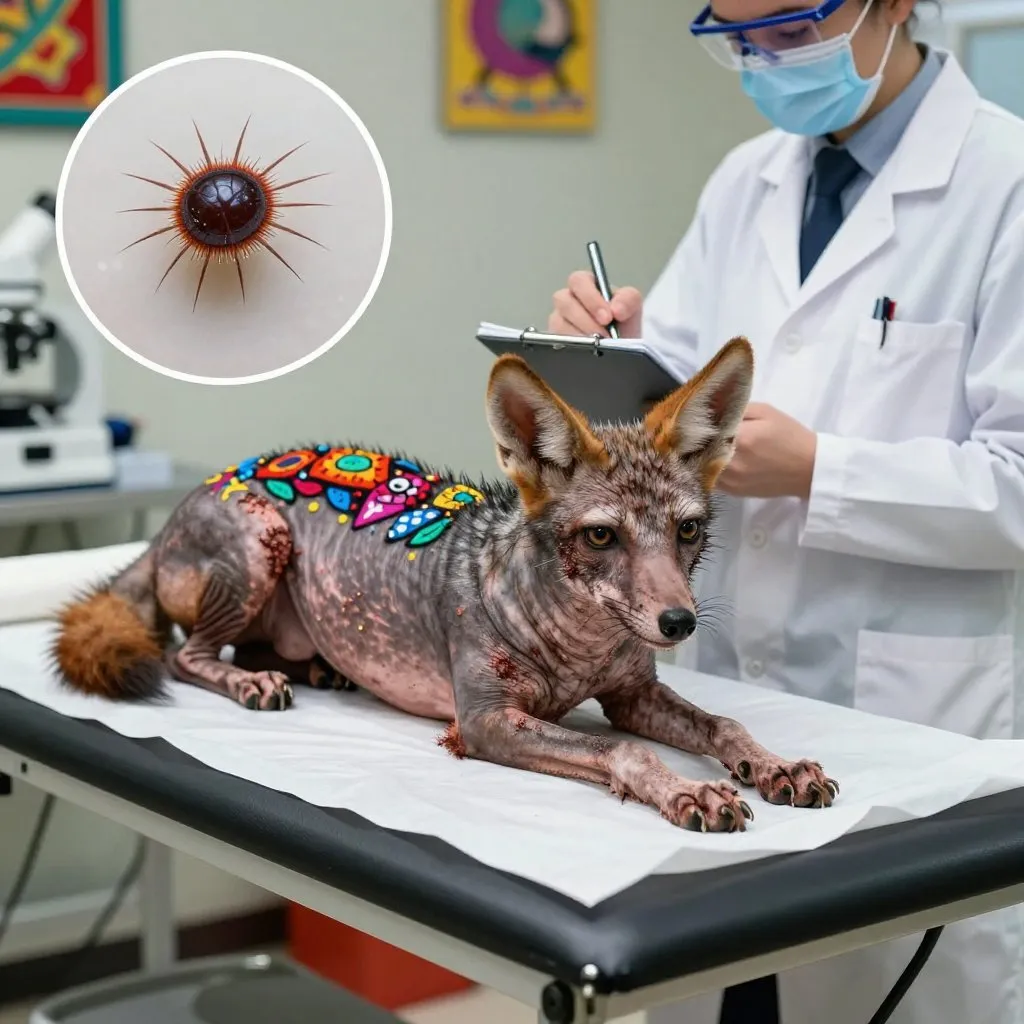
In 2010, University of Michigan biologist Barry O'Connor did what biologists do when someone hands them a mysterious carcass: he looked at it very carefully and told everyone what it actually was. Several alleged Chupacabra bodies found in Texas were brought to him over the years. They were coyotes. Specifically, they were coyotes with severe sarcoptic mange, a parasitic skin disease caused by Sarcoptes scabiei mites. Mange strips the fur, thickens and wrinkles the skin, and twists the posture of an animal until it looks like nothing you have ever seen in nature. It looks like a lot of things that aren't in nature. It looks like something that shouldn't exist.
A mangy coyote moving at the edge of your headlights at midnight is a deeply convincing argument for the existence of a monster. O'Connor was not unsympathetic. He just also had a microscope.
The mange explanation handles the hairless, dog-shaped Texas Chupacabras cleanly. It does not explain the original Puerto Rican accounts of a standing, spined, large-eyed creature that moved on two legs. It does not explain the puncture wounds or the blood loss in those first 1995 reports. Sarcoptic mange does not cause that. Mangy coyotes do not drain animals. Science had solved part of the problem and handed back the rest with a polite shrug. That is what follow-up studies are for. The follow-up studies have not fully arrived.
The Cultural Moment

The Chupacabra could not have picked a better decade to emerge. The mid-1990s were peak paranormal: "The X-Files" was the most watched drama on American television, the early internet was giving fringe communities their first real infrastructure, and tabloid media across Latin America was in full boom. A blood-drinking creature stalking rural Puerto Rico was not just news. It was content. It was exactly the kind of story that traveled.
Within a few years, the Chupacabra had appeared in video games, comic books, horror films of varying conviction, and enough television segments to fill a streaming service. In some communities, it moved past monster and into folk figure, a new chapter in a very old tradition of naming the thing in the dark that takes your animals. There are towns in Puerto Rico and Mexico where the Chupacabra is discussed the way rural American towns discuss a bad winter: as something that comes back, something you plan around, something the older residents have a different relationship with than the younger ones do.
It was never just about the goats. The goats were the opening act. The story was always about what communities do when something starts killing their livestock and nobody can explain it. The Chupacabra was the name they gave to that space where the explanation should have been.
Still Sucking

Reports have not stopped. Livestock deaths in Nicaragua were attributed to the creature in 2018. Similar reports came from the Philippines in 2019. Every few months, someone in rural Texas finds a hairless, unfamiliar animal dead on the roadside, posts a photograph, and the comment sections briefly abandon all pretense of skepticism. The cycle runs reliably, like a clock that only has one setting.
The Chupacabra will not be definitively explained, and at this point it is not clear that anyone particularly wants it to be. It sits at an intersection that turns out to be very crowded: wildlife misidentification, borrowed mythology, genuine livestock loss without obvious cause, and the deep human need to name the thing that is hurting you. Mangy coyotes handle some of those. None of them handle all of them.
Somewhere right now, a goat is standing in a field under a clear night sky in Puerto Rico or Texas or Nicaragua or the Philippines, chewing something, looking at nothing in particular. It does not know it is the most specifically targeted animal in the history of supernatural predation. It does not know about the armed patrols, the biologists, the newspaper headlines, the comic books, the three films of varying quality. The goat has no idea, and the goat does not care. Goats are like that. Whatever is out there, it picked the one prey animal on earth that is completely unimpressed by the whole situation.
Field Notes
- The Chupacabra legend originated in Puerto Rico in 1995, with the first reported attacks occurring in the town of Moca. The name translates literally to "goat-sucker" in Spanish.
- Researcher Benjamin Radford spent five years investigating the Chupacabra and published his findings in "Tracking the Chupacabra" (2011). He traced the original eyewitness description to similarities with the alien creature Sil from the 1995 film "Species."
- University of Michigan biologist Barry O'Connor identified multiple alleged Chupacabra carcasses as coyotes suffering from sarcoptic mange (Sarcoptes scabiei), a parasitic condition that causes hair loss and severe skin thickening.
- The Chupacabra has been reported in at least 15 countries across the Americas, from the United States to Argentina, with the highest concentration of reports in Puerto Rico, Mexico, and the American Southwest.
- In Canovanas, Puerto Rico, Mayor Jose "Chemo" Soto organized armed citizen patrols in 1995 to hunt the Chupacabra after over 150 farm animals were reportedly found dead with puncture wounds and blood loss.
Dig Deeper
Want the facts behind the folklore? Explore the real history of the Chupacabra, from Puerto Rico to the world.
Learn more about the Chupacabra