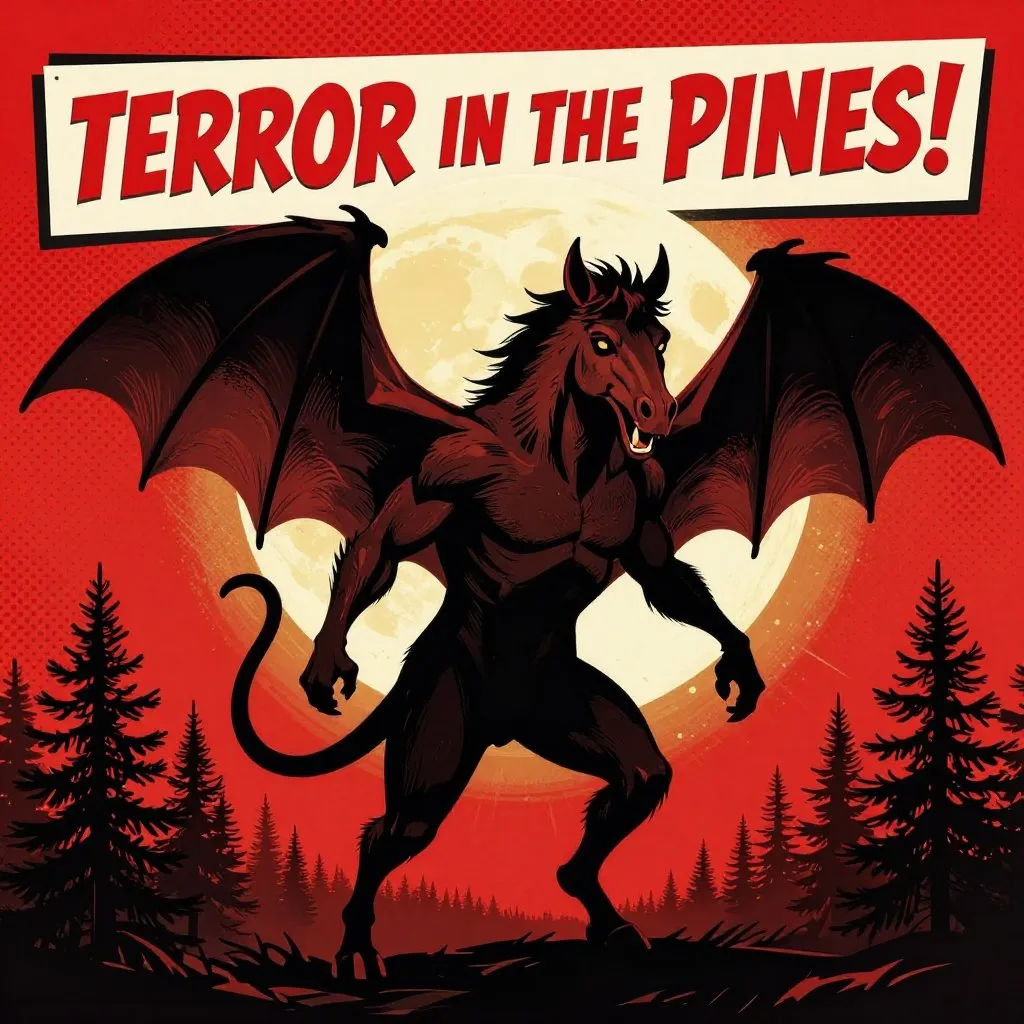
Mother Leeds
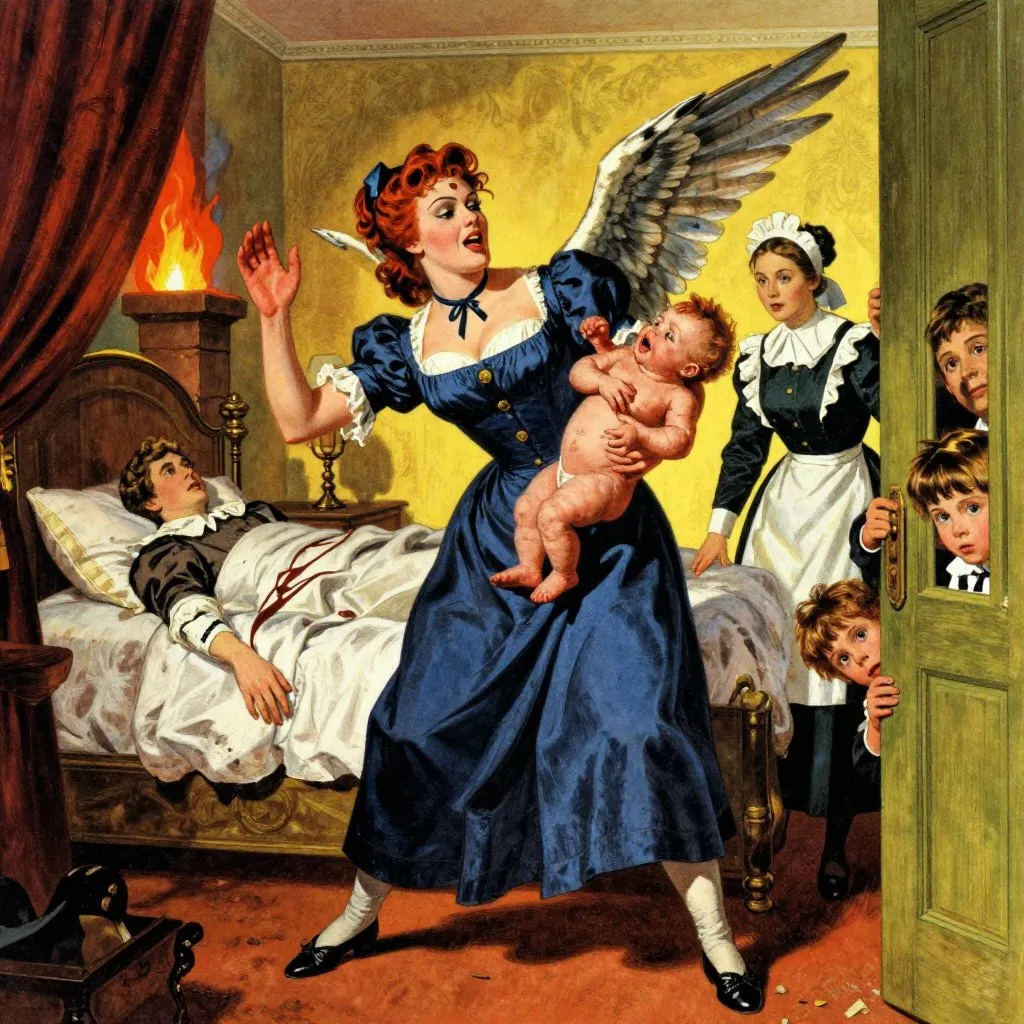
The year was 1735. The place was the Pine Barrens of southern New Jersey. A woman named Mother Leeds was deep into labor with her thirteenth child. To be clear: she already had twelve. Whatever her original feelings about this pregnancy, they had not survived the first twelve rounds.
She cursed the child. The exact words vary by telling, but the general thrust was: let it be the devil. She said this out loud. During labor. In front of a midwife. This is either the most committed complaint in human history or a genuine invocation, and the distinction is important because of what happened next.
The baby arrived normal. Then it stopped being normal. Hooves replaced feet. Bat wings tore through the skin of its back. A forked tail. The head of a horse, or a goat, depending on who was telling the story and how much time had passed since they slept. It screamed. In some versions it killed the midwife on its way out. Then it flew up the chimney and disappeared into the Pine Barrens, which is a very New Jersey way to make an exit.
The twelve surviving Leeds children were not consulted for comment. Their silence on the matter has lasted nearly three centuries.
The Barrens
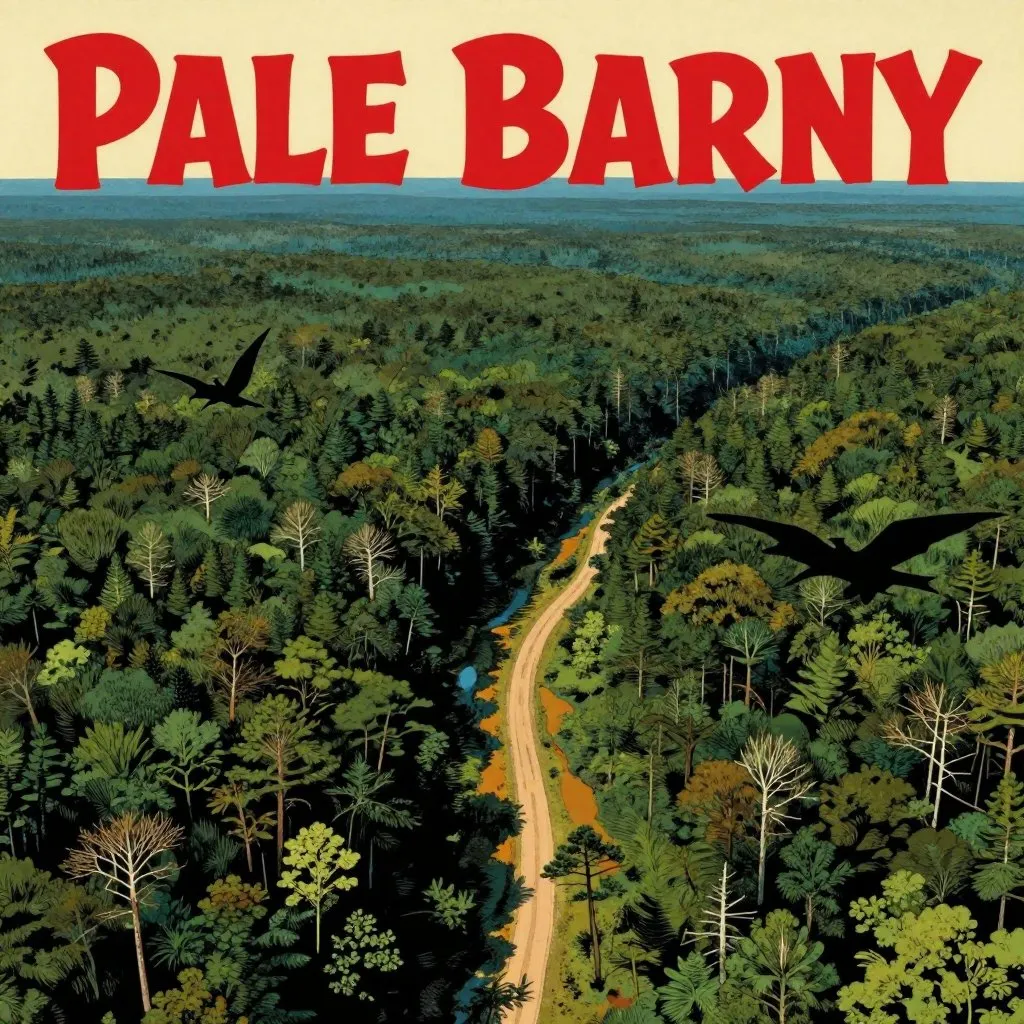
The Pine Barrens are one million, one hundred thousand acres of southern New Jersey. That number is not a typo. In a state best known for the Turnpike, the Shore, and being the wrong side of Philadelphia, there is a forest the size of Rhode Island. The soil is sandy. The water in the streams runs brown from cedar tannins, the color of strong tea. The trees are pitch pine and scrub oak, low and dense and persistent. The whole place smells like wilderness in a way that feels out of place this close to Atlantic City.
This is the Jersey Devil's territory. It has been for three hundred years. Residents of the Barrens have reported encountering a winged creature since before the country existed. The descriptions have stayed remarkably stable across three centuries and countless witnesses who had no reason to coordinate: a bipedal creature, three to four feet tall, bat wings, hooves, and a scream that does not belong to any bird you want to meet. Always near water. Always near the places where light doesn't quite reach.
The creature does not wander. It does not migrate. It has never been reported in Hoboken. The Pine Barrens are its home, and it has made the specific and deliberate choice to stay there for nearly three centuries while New Jersey built a highway through everything around it. Some might call that stubbornness. Others call it good judgment.
The Week of January 1909
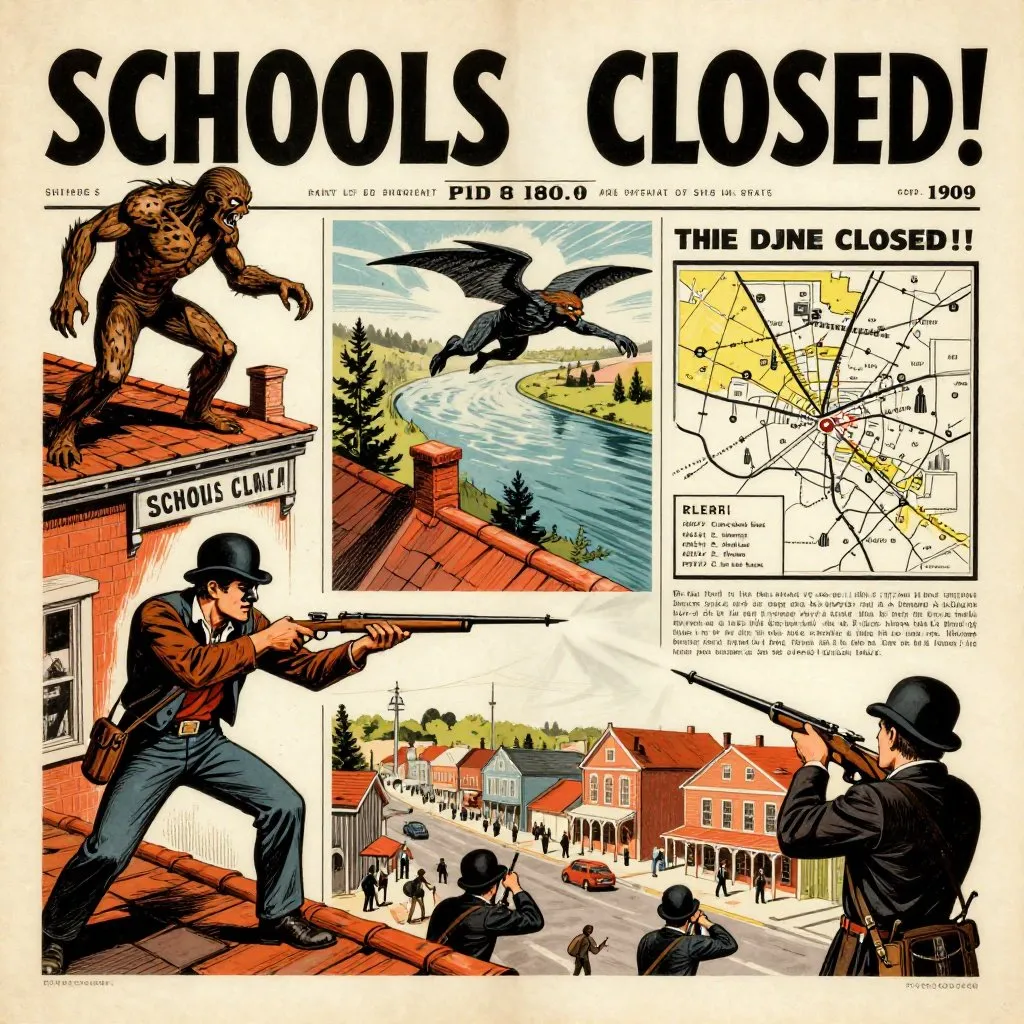
The Jersey Devil's most famous moment was not a single sighting. It was something closer to a public health event.
During the third week of January 1909, the creature appeared in at least thirty towns across southern New Jersey and the Philadelphia area over seven consecutive days. A social club in Camden fired at it and reportedly scored a hit. It flew away. In Gloucester City, witnesses watched it walk across a rooftop. In Bristol, Pennsylvania, it was spotted crossing the Delaware River, presumably without paying the toll. Schools closed. Factory workers refused to leave their houses. The Philadelphia Zoo announced a ten-thousand-dollar reward for its capture. The zoo's confidence in this offer was well-calibrated: nobody came close.
The hysteria lasted exactly one week. Then it stopped. Not wound down, not tapered off. Stopped. The creature that had spent seven days terrorizing three counties simply went back to the Barrens, and everyone involved went back to pretending the prior week had not happened. The Philadelphia papers moved on. The schools reopened. The zoo quietly pocketed its ten thousand dollars.
What is notable about 1909 is not that hundreds of people claimed to see something. It is that hundreds of people who had never met, in thirty different towns, over seven days, described the same thing. This is either the most coordinated mass hallucination in American history or a very busy week for a creature that usually keeps to itself. History has not fully decided which.
The Usual Suspects
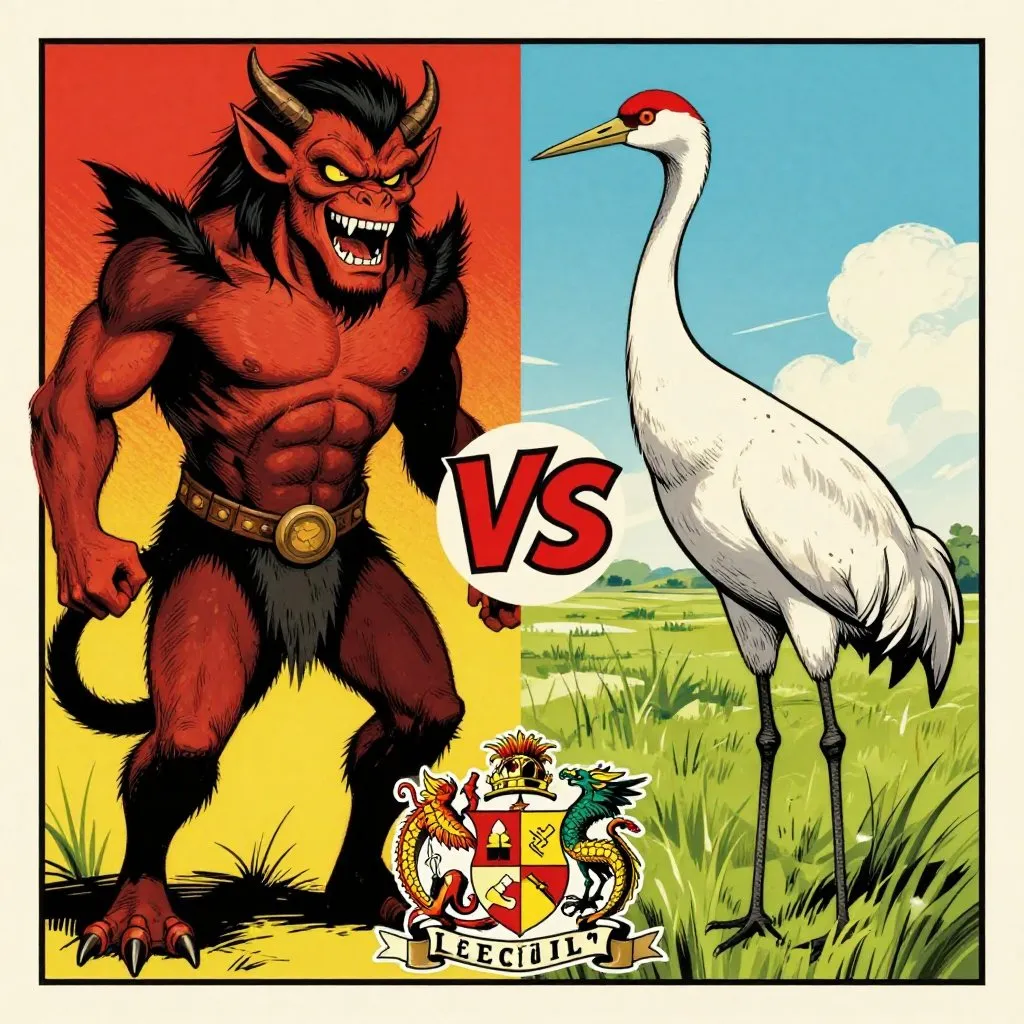
Scientists and historians have had a hundred years to explain the Jersey Devil, and they have produced two primary suspects. Neither is entirely satisfying.
Suspect one: the sandhill crane. The sandhill crane stands five feet tall. Its wingspan reaches seven feet. It makes a sound best described as what would happen if a gate hinge and a small child had a disagreement. In low light, near a dark forest, a sandhill crane is genuinely unsettling. It has the gait of something that knows it doesn't belong. Ornithologists have offered it as the rational explanation, and they are not wrong that it could explain some sightings. What it cannot explain is the hooves, the bat wings, or the three-foot child with a horse's head flying up a chimney in 1735. The crane does its best. It is not enough.
Suspect two: political satire. This one requires more patience but pays off. Benjamin Franklin's rival Daniel Leeds published almanacs in the late 1600s that Quaker leaders condemned as un-Christian. The Leeds family crest featured a wyvern, a dragon-like creature straight from European heraldry. Over time, the Leeds name became despised, the wyvern became associated with them, and somewhere in that long game of colonial telephone, "the Leeds Devil" emerged. Historian Brian Regal of Kean University has spent considerable energy building this case. The argument has footnotes and primary sources and is significantly more convincing than a sandhill crane explanation. Which is another way of saying: the Jersey Devil may have started as a pamphlet war and escalated from there, which is extremely on-brand for New Jersey.
The Brand

At some point the Jersey Devil stopped being a local problem and became a local asset. This transition was not announced. It just happened, the way all good rebranding happens: gradually, then all at once.
The New Jersey Devils NHL franchise adopted the name in 1982, after a fan naming contest. The team had just relocated from Colorado, where they had been the Rockies, and before that the Kansas City Scouts, which tells you something about the franchise's pre-New Jersey identity. Since becoming the Devils, they have won the Stanley Cup three times, in 1995, 2000, and 2003. This is three more championships than the creature has won, but the creature was not eligible.
The Pine Barrens are now a protected National Reserve and a UNESCO Biosphere Reserve, which means the Jersey Devil's home has more official recognition than most cryptids enjoy. Tourism into the Barrens is steady. Bumper stickers are plentiful. The Jersey Devil appears on craft beer labels, trail signs, and at least one restaurant in Toms River that did not think too hard about the implications of naming a children's menu after a monster born from a curse. New Jersey has decided, collectively, that if you cannot remove the thing, you might as well sell it. Three hundred years of reputation is three hundred years of brand equity. The Barrens are just the headquarters.
Still in the Barrens
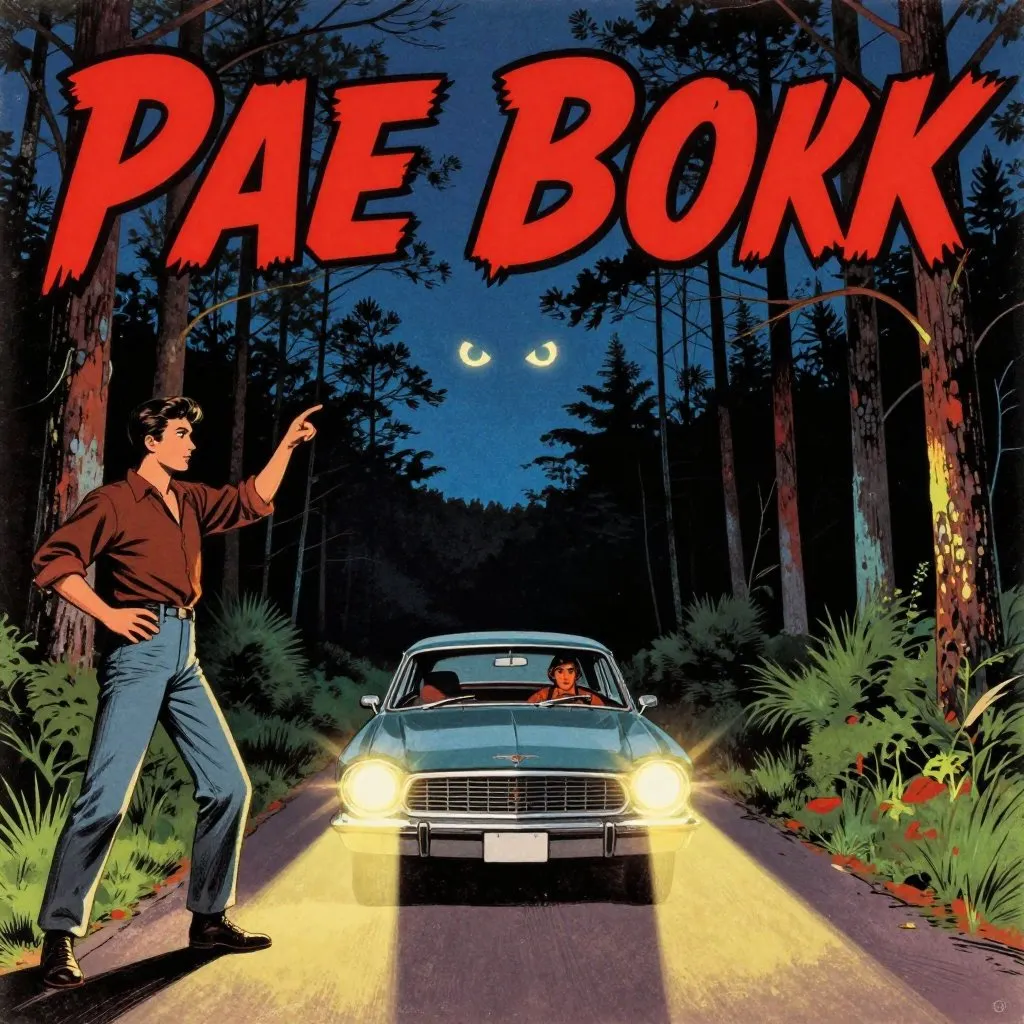
The Pine Barrens in 2026 look roughly like the Pine Barrens in 1735. The highways circle around them. The suburbs press up to the edges and stop. Inside, the pitch pines are still dense, the streams still dark, the roads still the kind where your headlights feel like a suggestion rather than a solution. The one million acres have not moved. Neither has what lives in them.
People still report things. A shape moving between trees at a distance that makes identification impossible. A sound from somewhere behind the tree line that is not an owl and not a crane and not anything from a field guide anyone would own. The reports come in from hikers, from locals who have lived on the edge of the Barrens for decades and know the difference between what belongs there and what does not. Most of them are not excitable people. Most of them have no interest in being believed. They just describe what they heard or saw, and then they go quiet in the way people go quiet when they have decided not to go back.
The Jersey Devil predates the United States by fifty-two years. It was here before the country had a name, before New Jersey had a senate, before there was a turnpike or a boardwalk or a single diner open at 3 AM. It has outlasted every other thing that seemed permanent about the place. Some things about New Jersey are eternal, and this creature is one of them. Not because anyone can prove it. Because nobody has proven otherwise. And in the Barrens, after dark, that distinction starts to feel like it matters quite a lot.
Field Notes
- The Jersey Devil legend dates to at least the 1730s, making it one of the oldest cryptid legends in the United States. The creature is sometimes called the Leeds Devil, after the Leeds family associated with the original story.
- During the week of January 16-23, 1909, hundreds of Jersey Devil sightings were reported across more than 30 towns in New Jersey and Pennsylvania. Schools and factories closed, and the Philadelphia Zoo offered a $10,000 reward for the creature's capture.
- The Pine Barrens (officially the New Jersey Pinelands) cover approximately 1.1 million acres of coastal plain in southern New Jersey. The area was designated a United States National Reserve in 1978 and a UNESCO Biosphere Reserve in 1983.
- The New Jersey Devils NHL team was named after the creature following a 1982 fan naming contest. The team relocated from Colorado (formerly the Kansas City Scouts and Colorado Rockies) and has won the Stanley Cup three times (1995, 2000, 2003).
- Historian Brian Regal of Kean University has proposed that the Jersey Devil legend evolved from political attacks on the Leeds family, particularly Daniel Leeds, whose astronomical almanacs were condemned by Quaker leaders and whose family crest featured a wyvern.
Dig Deeper
Want the facts behind the folklore? Explore the real history of the Jersey Devil, the Pine Barrens, and nearly three centuries of sightings.
Learn more about the Jersey Devil