
The First Reports
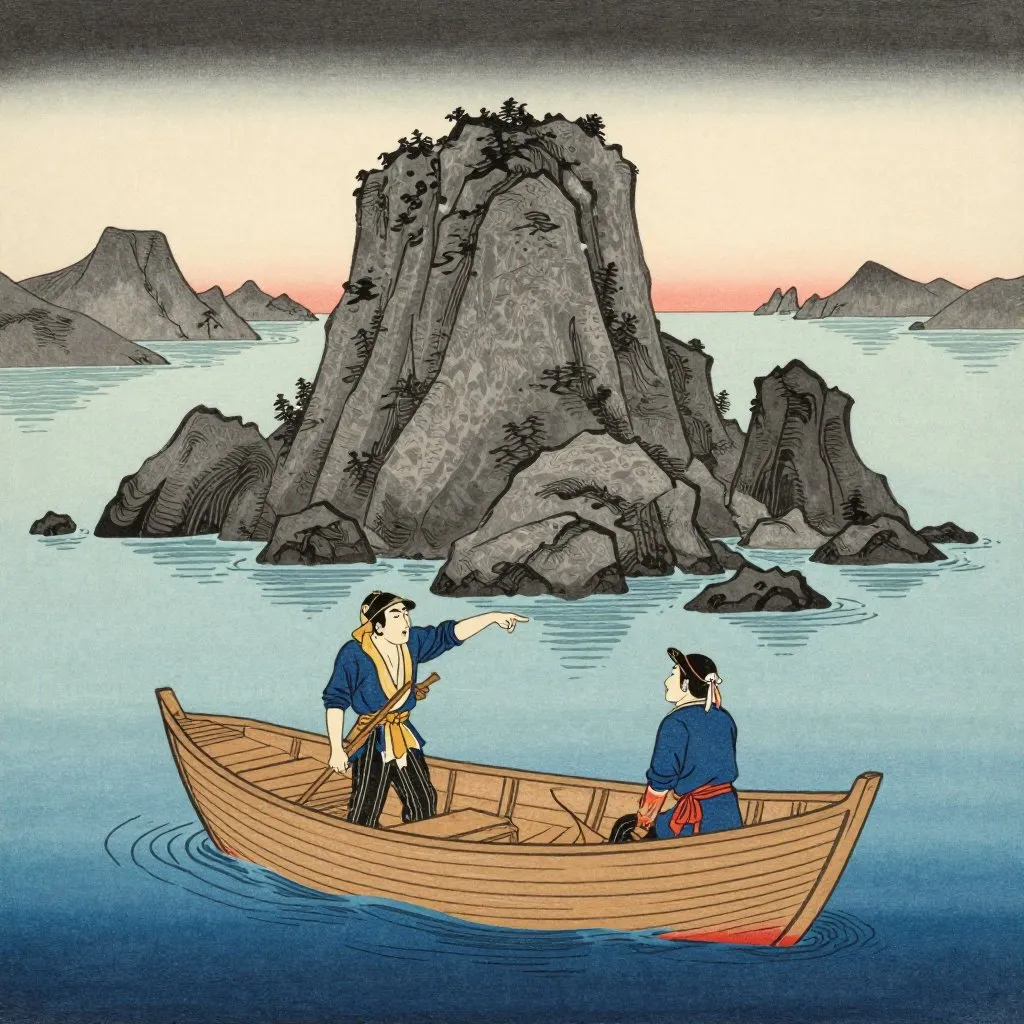
Norse sailors were not imaginative people. They crossed the North Atlantic in open wooden boats, ate salted fish for months at a time, and named a glacier "Glacier." So when they came home and told stories about an island that moved, people listened.
The story was always the same. A fisherman found a promising bank, shallow and alive with fish, and dropped anchor. The catch was good. Better than good. Then the bank shivered. Then it began to sink. Then the water churned white and the fish scattered in every direction, which fish only do when something below them is worse than whatever is above. The fishermen rowed. They did not stop rowing until the shore was close enough to swim to if they had to.
The earliest written account comes from the Orvar-Odds saga, 13th century, which describes a creature so large it was indistinguishable from land. Later, in 1752, Norwegian bishop Erik Pontoppidan included the Kraken in his natural history of Norway. He described it as "round, flat, and full of arms" and estimated its circumference at a mile and a half. A sitting bishop, in a formal scientific text, describing an animal the size of a small city. The bishop was not the kind of man who exaggerated. He was the kind of man who had heard too many sailors tell the same story and eventually stopped looking for a better explanation.
The Arms
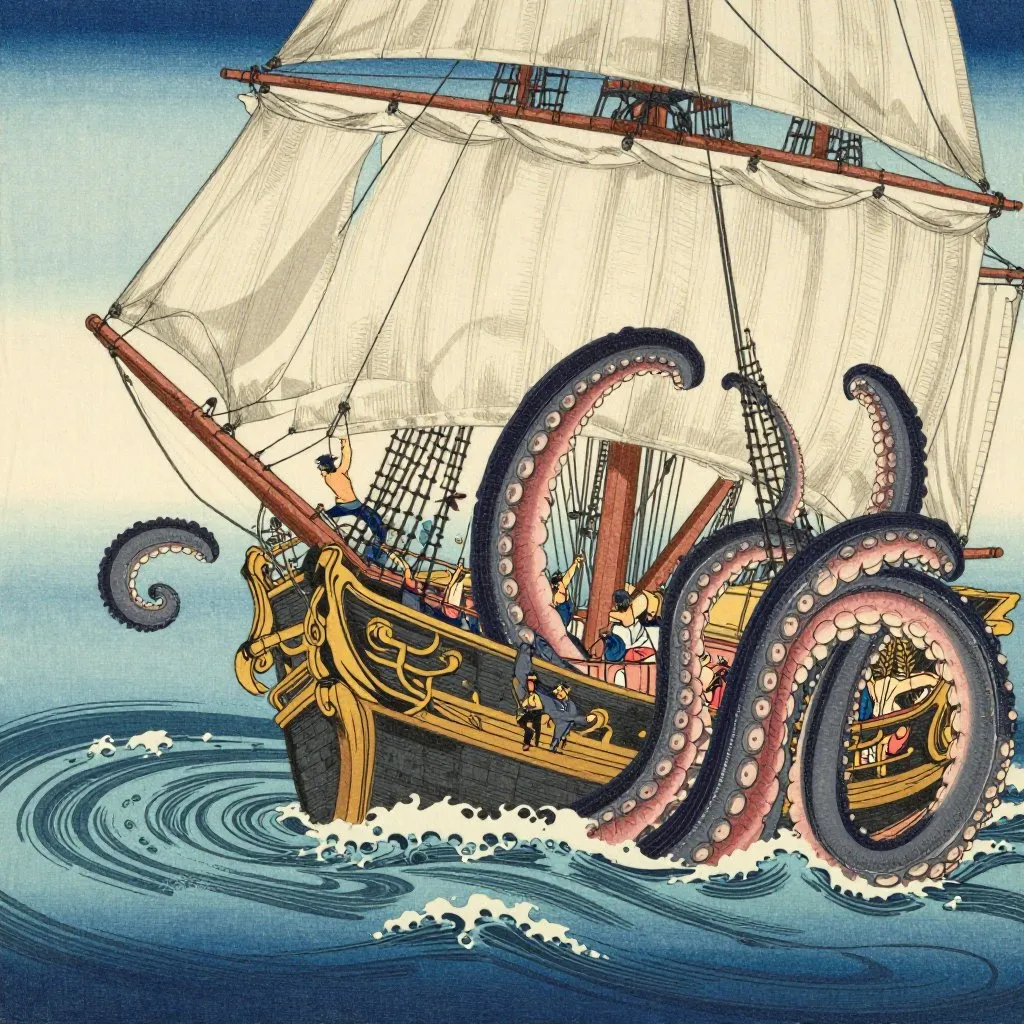
Every account agrees on the arms. Long, impossibly thick, covered in suckers that could grip the mast of a ship and hold. The sailors who survived described a particular sequence: first, stillness. Then a shadow beneath the water, rising. Then the arms, breaking the surface one by one like questions you do not want answered.
Some accounts describe the Kraken grabbing a ship directly. Others are worse. In those versions, it does not attack at all. It simply submerges, and the displacement of its body creates a whirlpool strong enough to pull a ship down. It capsizes vessels by leaving. It creates catastrophe as a side effect of its indifference. This is the maritime equivalent of a thunderstorm that doesn't know you exist and ruins your wedding anyway.
The arms came from below. This detail appears in almost every account, across different countries and different centuries. It is not the part of the monster they put on tapestries. It is the part that stayed with people afterward, when the fire was lower and the water was dark outside. Arms from below. The ocean floor is, at its deepest, nearly seven miles down. The arms came from below that.
The Science
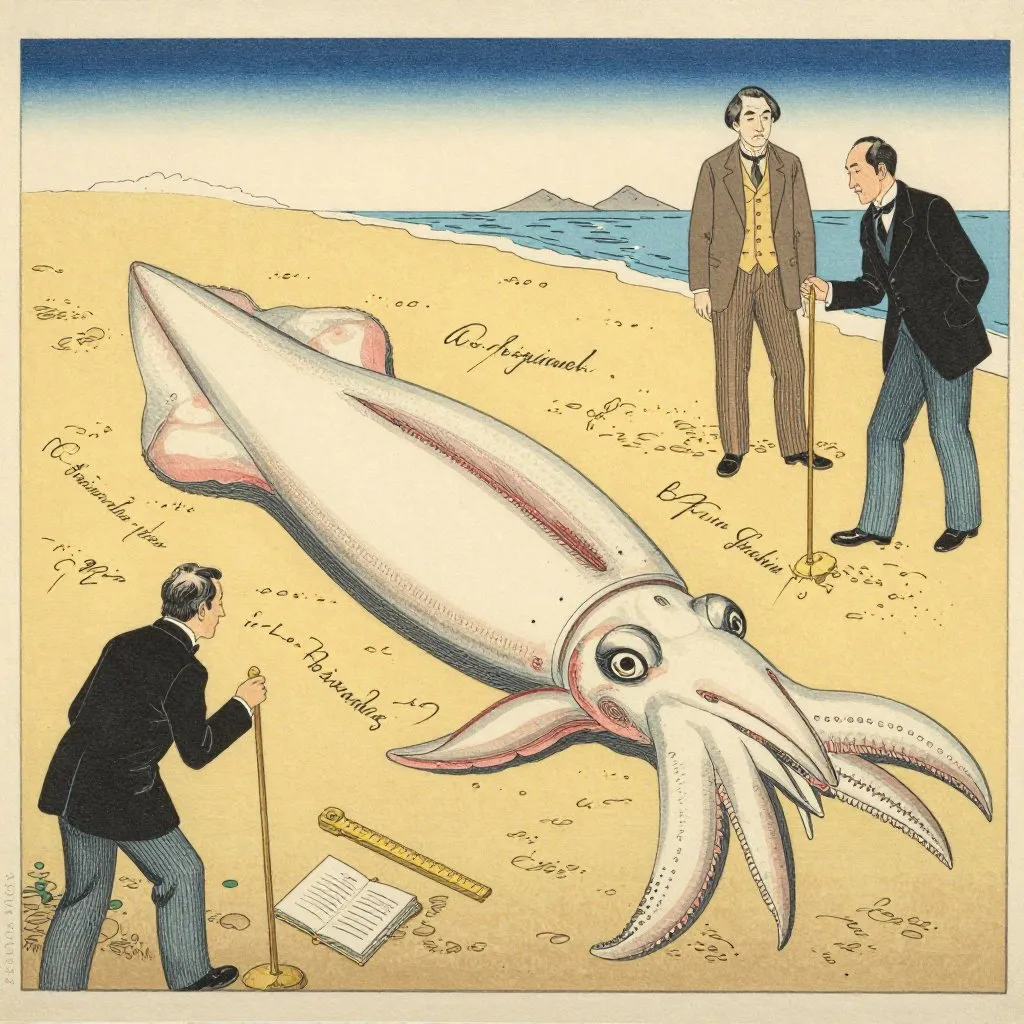
In 1857, a Danish zoologist named Japetus Steenstrup stood before the Scientific Society of Copenhagen and described, with professional composure, a giant squid. His source material was a beak. Just a beak, recovered from a specimen that had washed ashore in Denmark. It was enough. The beak alone was larger than it had any right to be.
He named the animal Architeuthis dux. It was real. It had arms lined with toothed suckers that could strip flesh from bone. It lived in the deep ocean, far from ships and cameras and anything that might have noticed it sooner. It grew to sizes that, had anyone admitted them at a dinner party, would have ended the conversation. Steenstrup presented his findings and sat down. The Society received the information with what the records describe as measured enthusiasm, which is how scientists say "we are quietly horrified but maintaining our composure."
The public received it differently. The public understood immediately what the discovery meant. It meant the sailors had been right. It meant the ocean had been keeping a secret, a large, eight-armed secret, and was not sorry about it, and was not done.
The Specimens
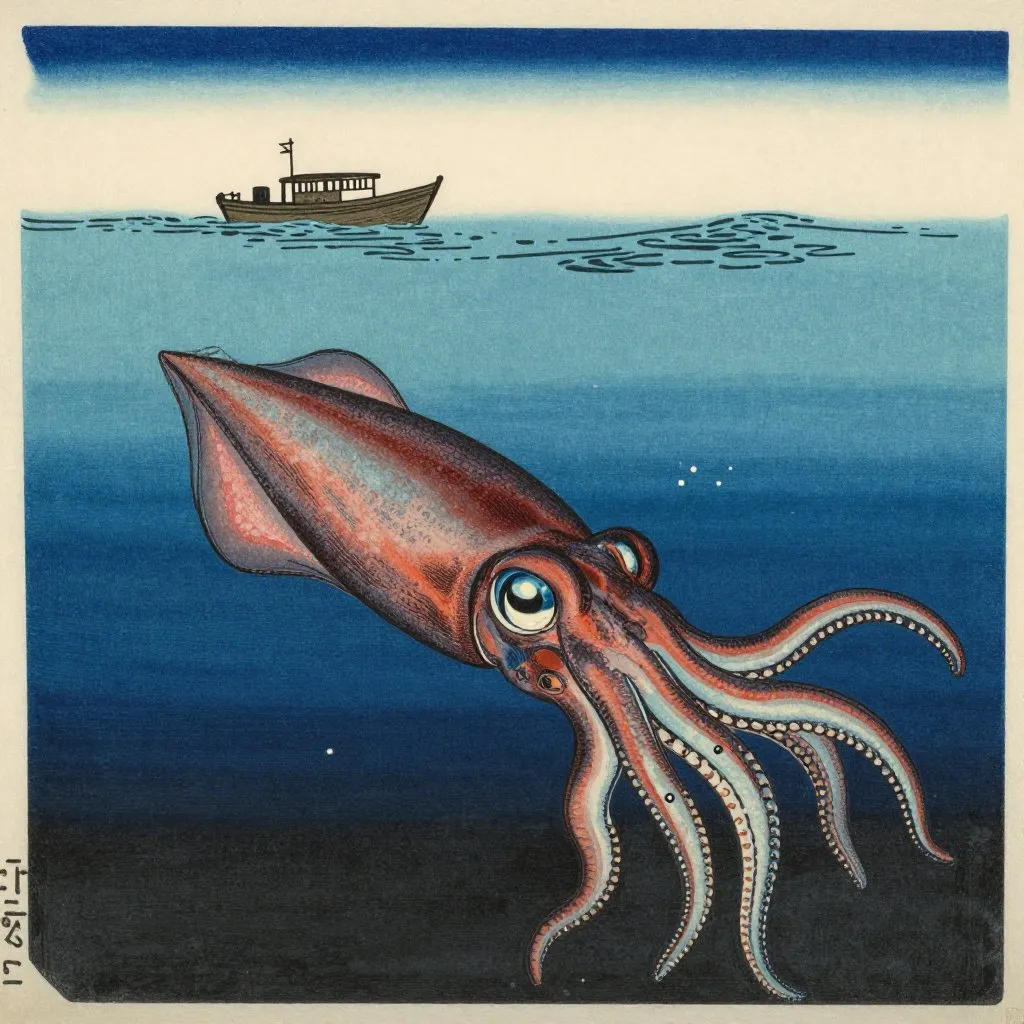
For more than a century after Steenstrup's description, no one saw a giant squid alive. Everything known about Architeuthis dux came from what washed up, what got tangled, and what turned up inside sperm whales during processing. Whalers knew the squid well. They found the beaks in whale stomachs by the dozen. They found circular scars on whale skin, sucker marks the size of dinner plates, from animals the whales had fought in total darkness miles underwater. The whales usually won. That fact is only slightly comforting.
The largest confirmed giant squid measured 43 feet from mantle to tentacle tip. Its eyes were 11 inches in diameter, the largest of any living animal, evolved specifically to detect the faint bioluminescence of sperm whales descending from above. Its beak was hard as horn and curved like a parrot's, capable of cutting through dense fish in a single bite. Its brain was shaped like a donut, with the esophagus passing through the center hole, which meant that swallowing anything too large could cause genuine brain damage. Evolution spent 500 million years designing this animal and still couldn't find a better place to put the throat.
Each specimen raised the same questions in sequence: how large do they get. How many are there. What else is down there that we haven't found. The scientists wrote careful papers. The papers did not answer the questions.
The Video
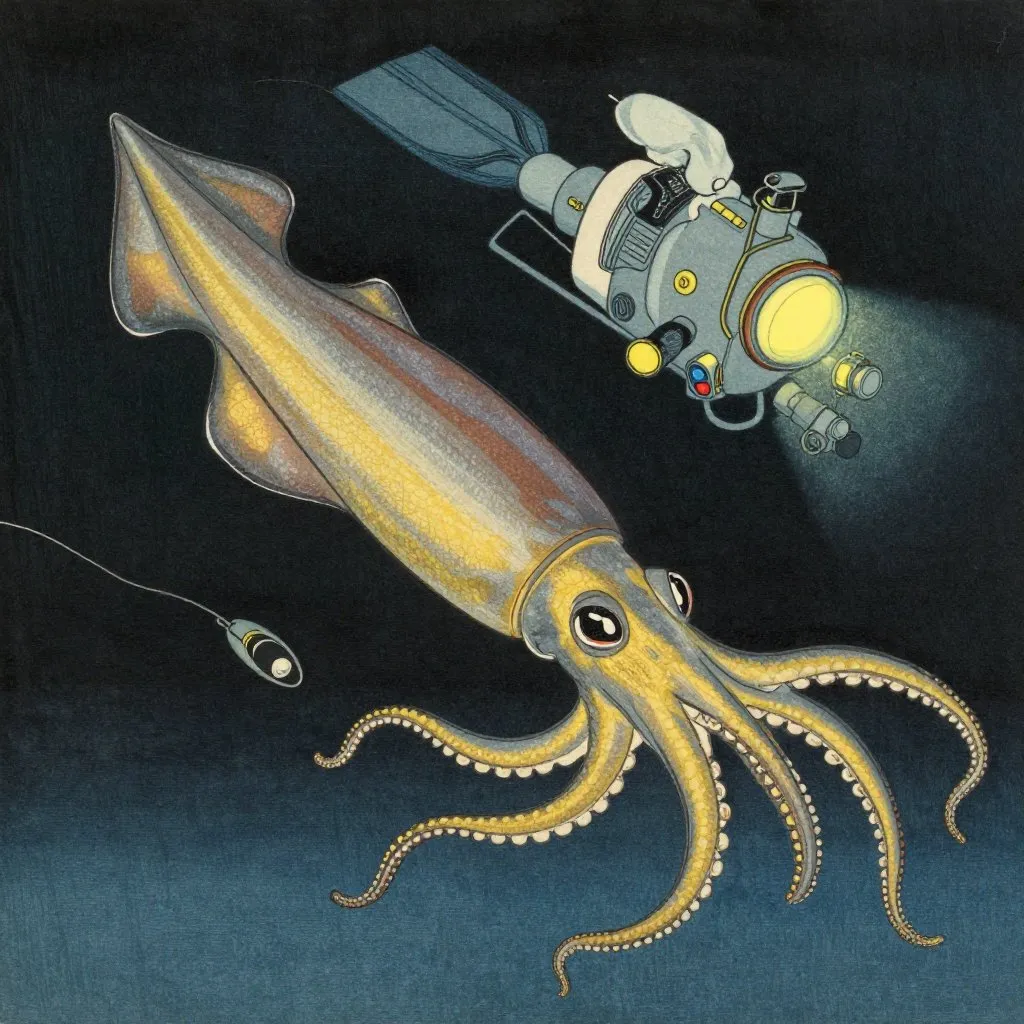
On September 30, 2004, at a depth of 900 meters in the North Pacific, a giant squid attacked a baited research line and was photographed for the first time in its natural habitat. Japanese researchers Tsunemi Kubodera and Kyoichi Mori had been trying for years. They lowered the line. They waited. The squid arrived. It fought the line for four hours before pulling free, leaving behind a severed tentacle that measured 18 feet. The tentacle continued trying to grip things after separation. The researchers noted this in their paper with what appears to be forced calm.
In 2012, the same team returned with a Discovery Channel crew and a submersible. They went down to 2,066 feet, past the point where sunlight reaches, into the zone that oceanographers clinically call the midnight zone and everyone else calls the reason to stay on the boat. They found the squid. They filmed it. The footage showed a silver and gold animal, vast and unhurried, drifting through permanent darkness with the ease of something that had never worried about anything in its life.
It was not what the stories described. No rage. No grasping at ships. It moved through the water with something close to grace, which was its own kind of unsettling. The monster of ten centuries of seafaring nightmares turned out to be real, and it turned out to be completely unbothered by being found. It had been down there the whole time. It had not been hiding. It simply had not needed to be seen.
What Else Is Down There
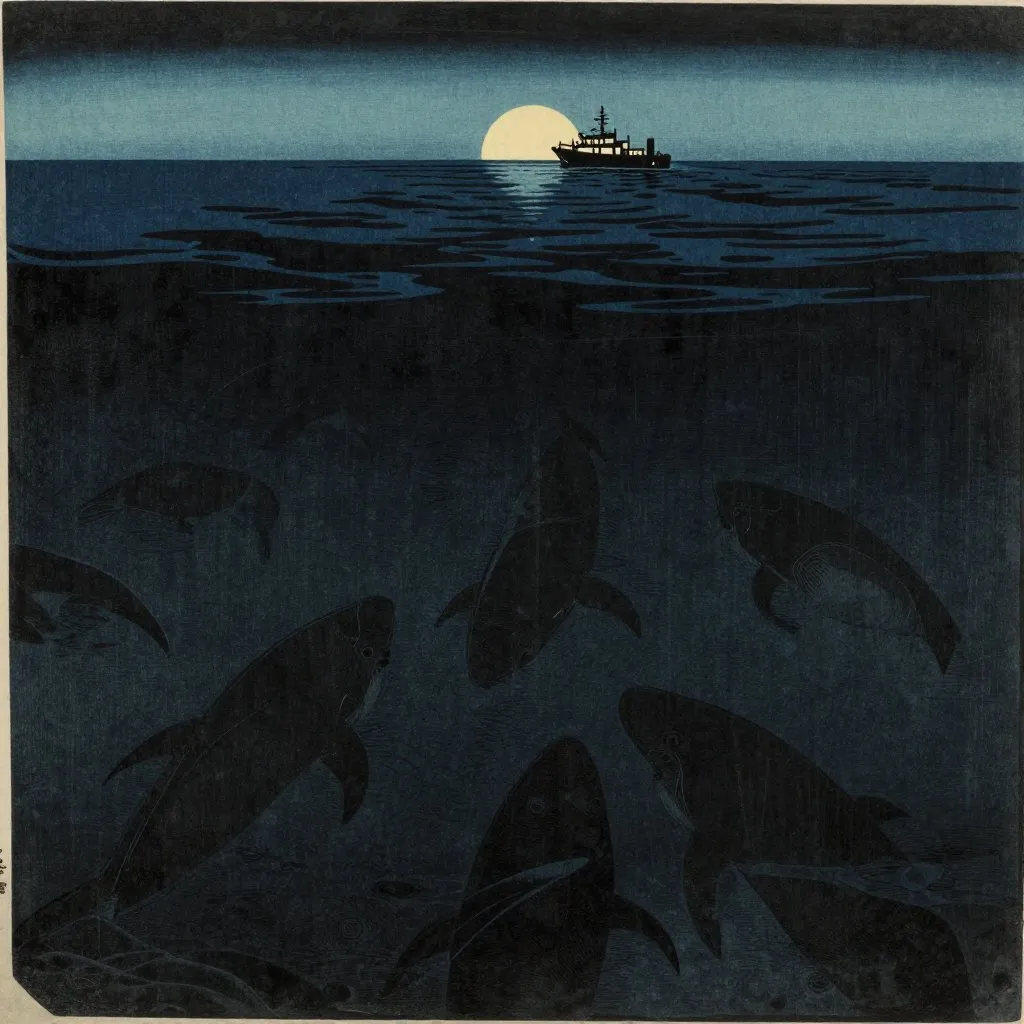
The giant squid is not the largest cephalopod. That distinction belongs to the colossal squid, Mesonychoteuthis hamiltoni, first described in 1925 and encountered, in full living form, a handful of times since. It is shorter than the giant squid but significantly heavier. Instead of suckers on its tentacle clubs, it has rotating hooks. Hooks that spin. On the tentacles of a creature the size of a school bus, in the deep water around Antarctica, where the ocean is cold enough to slow a human body to a stop in under ten minutes.
The colossal squid has eyes estimated at 16 inches in diameter. The largest eyes of any animal ever documented. Eyes that size, in that darkness, are not for seeing fish. Eyes that size are for detecting the shadow of a sperm whale descending from above at 20 miles per hour with the intention of eating you. This is the visual system of something that has predators. Something lives down there that hunts the colossal squid.
The ocean covers 71% of the Earth's surface. Its average depth is 12,100 feet. The deepest point, Challenger Deep in the Mariana Trench, is nearly 36,000 feet down. Humans have visited it twice. We have better maps of the surface of Mars than of our own ocean floor. The Kraken turned out to be real, just filed under a different name and moved to a peer-reviewed journal. The Norse sailors described something that existed. They had no instruments, no submersibles, and no reason to make it up. They were not imaginative people. They were very cold people in wooden boats who had seen something, and they went home and told the truth. The ocean does not care whether we believe them.
Field Notes
- The giant squid (Architeuthis dux) was first scientifically described in 1857 by Danish zoologist Japetus Steenstrup. The largest confirmed specimen measured approximately 43 feet (13 meters) in total length, including tentacles.
- The first photographs of a living giant squid in its natural habitat were taken in September 2004 by Japanese researchers Tsunemi Kubodera and Kyoichi Mori at a depth of 900 meters (2,950 feet) in the North Pacific Ocean.
- The colossal squid (Mesonychoteuthis hamiltoni), first described in 1925, is distinct from the giant squid. It has rotating hooks on its tentacle clubs rather than suckers and is believed to be the heaviest living invertebrate, with specimens weighing up to 495 kg (1,091 lbs).
- Erik Pontoppidan, Bishop of Bergen, included a detailed description of the Kraken in his 1752 work "The Natural History of Norway," treating it as a real animal and estimating its body at one and a half miles in circumference.
- Giant squid eyes can reach up to 27 centimeters (about 11 inches) in diameter, making them the largest eyes in the animal kingdom. This adaptation allows them to detect the faint bioluminescence of predators like sperm whales in the deep ocean.
Dig Deeper
Want the facts behind the folklore? Explore the real history of the Kraken, giant squid, and the deep ocean.
Learn more about the Kraken