The Lake
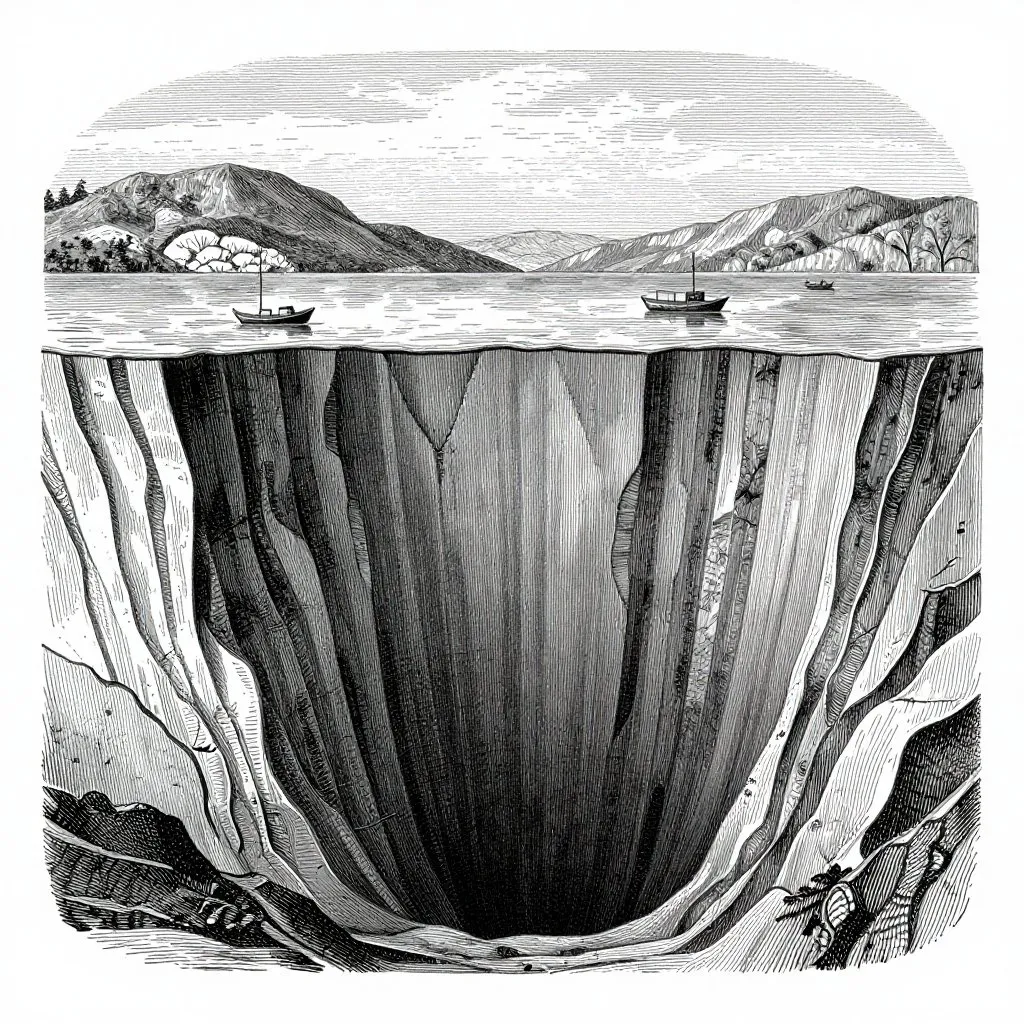
Loch Ness holds more fresh water than every lake in England and Wales combined. Not most. All. It is 23 miles long, over 700 feet deep in places, and so dark with dissolved peat that visibility drops to zero within a few feet of the surface. You can see your hand going in. You cannot see it at arm's length. The loch is not dark because something is hiding in it. The loch is dark because Scotland decided it should be, and Scotland is not a country that negotiates.
The loch sits along the Great Glen Fault, a geological crack that runs clean through the Scottish Highlands like the country tried to snap in half and stopped halfway. The fault is old. The water is cold year-round. The surface is often still, especially in the early morning, when the mist comes off the hills and the whole thing looks like a painting done by someone who wanted you to feel uneasy about fresh water.
For at least 1,500 years, people living near the shore have reported seeing something in that water. Not the same thing. Different shapes, different sizes, different distances. But always something. A shape that shouldn't be there. A movement the wind doesn't explain. The loch has heard all of this and offered no comment.
The Saint and the Beast
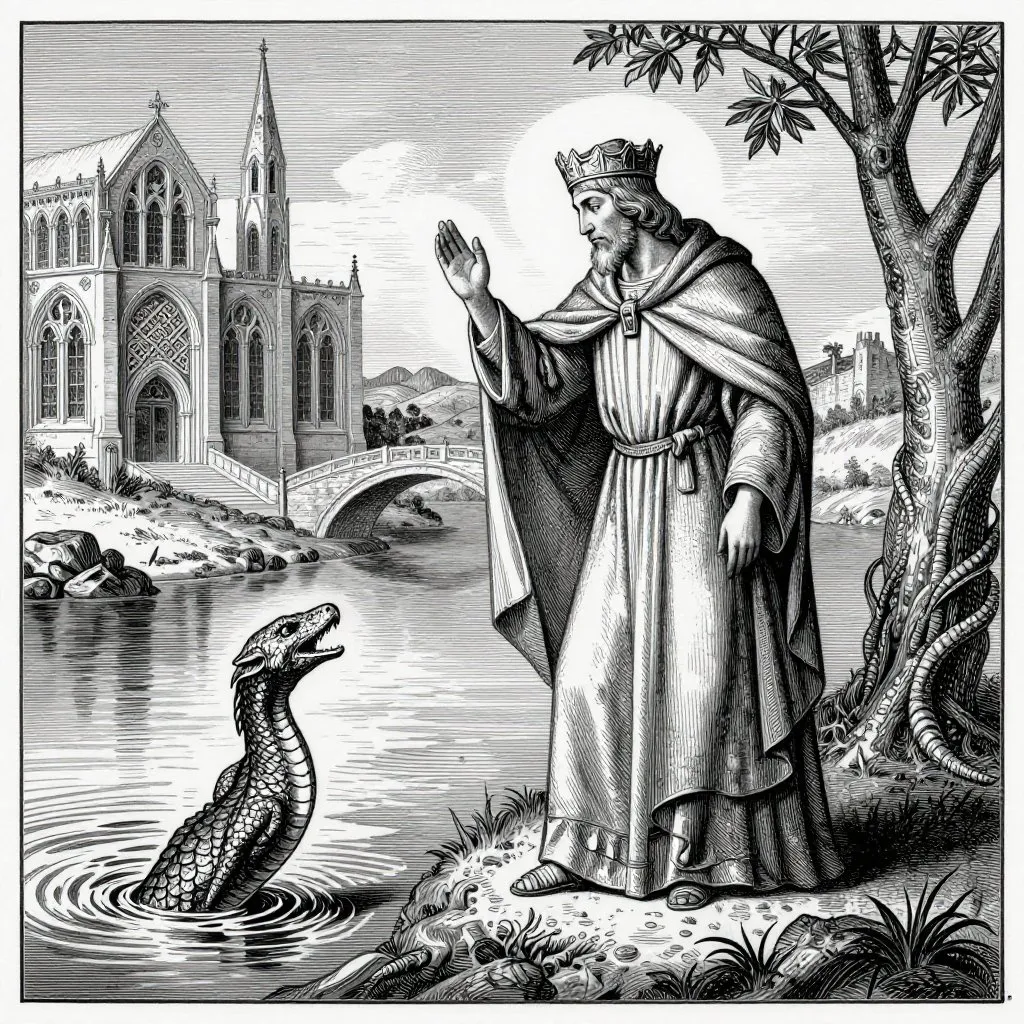
The earliest account on record comes from 565 AD, when Saint Columba was traveling through the Scottish Highlands on his way to visit a Pictish king. Near the River Ness, he encountered a group of locals burying a man. The man, they explained, had been swimming and something had bitten him. Then killed him. The body had been pulled out with hooks.
Columba had a traveling companion named Lugne Mocumin who needed to cross the river. This is not a job you want in this story. Lugne swam out. The creature rose from the water. Opened its mouth. Started toward him. Columba raised his hand, made the sign of the cross, and told it to go back. The creature, according to the account written by Columba's biographer Adomnan roughly a century later, stopped. Turned around. Fled. The onlooking pagans were reportedly impressed.
This is the most successful Nessie encounter in recorded history. No sonar arrays. No submarine cameras. No documentary crew standing on the shore with waterproof lights and a presenter who keeps saying "extraordinary." Just a saint, a scared swimmer, and firm boundaries. Every expedition that came after spent more money and got worse results. Columba's technique has not been seriously revisited. This seems like an oversight.
The Surgeon's Photo
Marmaduke Wetherell was a big-game hunter and self-described naturalist who, in December 1933, convinced the Daily Mail to hire him to find evidence of the Loch Ness Monster. This was a reasonable transaction at the time. He arrived at the loch, conducted his investigation, and announced he had found fresh footprints on the shore. Large ones. Clearly made by a large four-footed animal. He was very confident about this.
The Natural History Museum examined casts of the prints. Their conclusion: the prints were made with a dried hippo foot, the kind used as an umbrella stand in Edwardian households. Identical on both sides. Someone had been pressing a novelty decoration into the mud and walking away. The Daily Mail, which had funded the expedition, ran the story. Wetherell was publicly humiliated. He left the loch.
He did not, however, let it go.
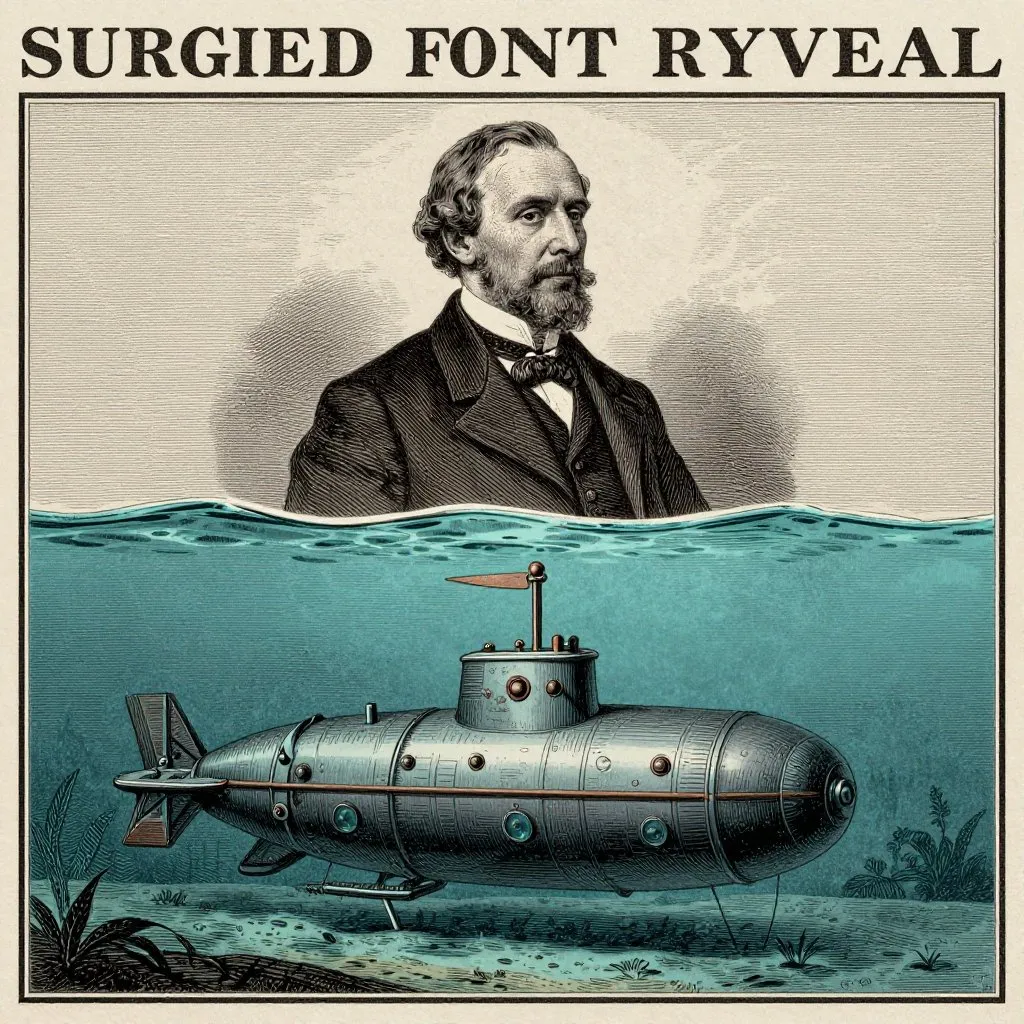
In April 1934, a photograph appeared in the Daily Mail. It showed the loch's surface with a long neck and small head rising out of it. Clean, clear, believable. The photo was attributed to Robert Kenneth Wilson, a London gynecologist, which lent it medical credibility for reasons that are not entirely clear. It became the defining image of the Loch Ness Monster for sixty years. Postcards. Book covers. Every documentary that existed made use of it.
In 1994, a man named Christian Spurling confessed on his deathbed. The neck and head were sculpted from plastic wood. The body was a toy submarine. The whole arrangement had been constructed and photographed by Marmaduke Wetherell, using Wilson as a respectable front. Wetherell had waited a year, built a fake monster, planted it in the loch, and fed it to the exact newspaper that had humiliated him. Then he died in 1951 without saying a word. Well played, Marmaduke. Extremely well played.
The Hunt Goes Professional
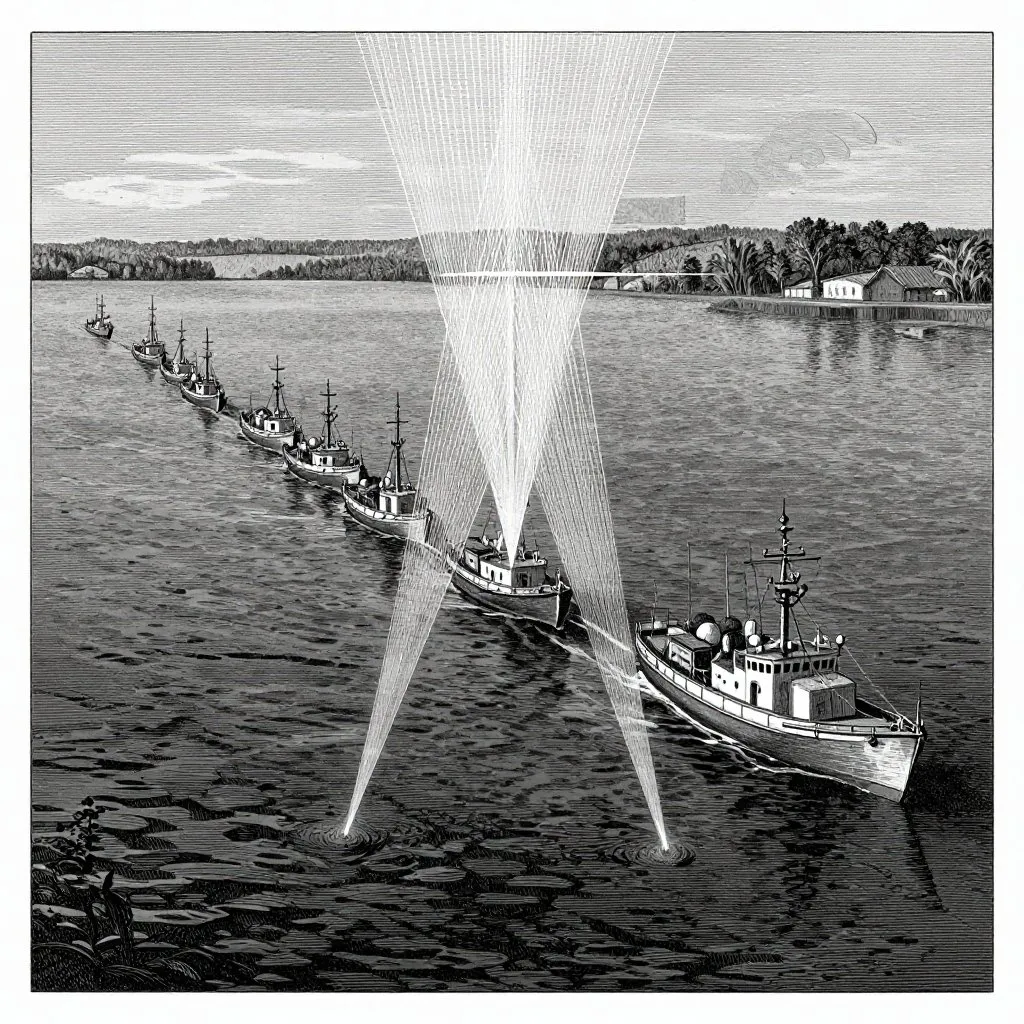
By the 1970s, Nessie hunting had become a legitimate industry. The Loch Ness Investigation Bureau ran surveillance from the shore for years, using cameras mounted on caravans pointed at the water. They captured a great deal of footage of the water. Not of anything in it.
The operation that defined the era came in 1987. Operation Deepscan lined up 24 boats across the full width of Loch Ness and swept the entire length of it from north to south. The boats dragged sonar equipment through the water like a net. The cost was over one million pounds. The operation took days. It was the most thorough acoustic survey of the loch ever conducted, and it produced three sonar contacts at depth: large, moving, unidentified. The sonar operators noted them. Named them "large, mid-water." Went home. The contacts were never explained and never found again.
Subsequent decades brought better technology. In 2003, the BBC funded a survey using 600 sonar beams and satellite tracking. Result: no plesiosaur, no giant reptile, no animal large enough to account for the sightings. In 2019, a team from the University of Otago collected water samples from the loch and ran environmental DNA analysis on everything in it. Every organism that had shed DNA into that water. The results came back. There was a lot of eel DNA. More eel DNA than expected. Possibly very large eels. Their conclusion, presented to a waiting world: Nessie might be a very large eel.
The public received this information politely. Then mostly ignored it. "Giant eel" does not move the same amount of merchandise.
The Economy of Maybe
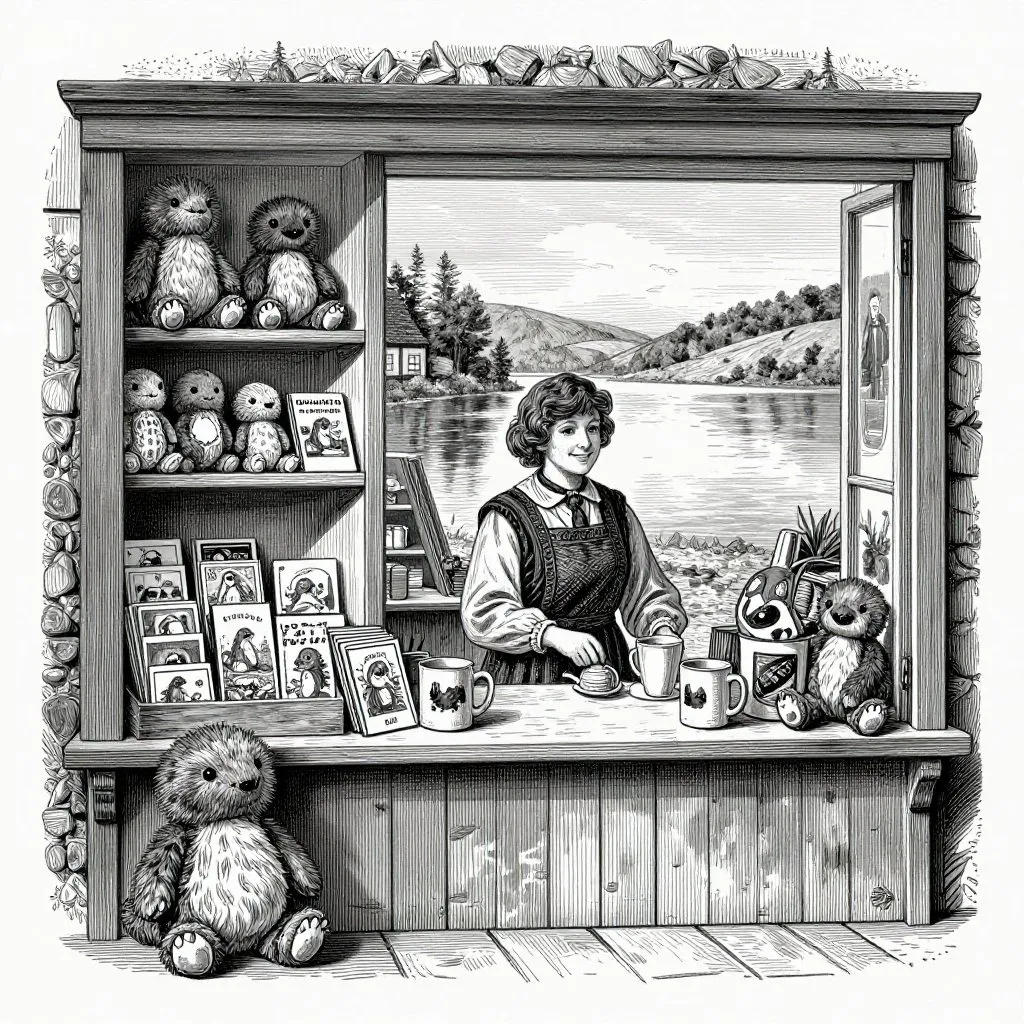
Loch Ness tourism generates an estimated 80 million pounds per year. There are Nessie boat tours, Nessie museums, a Nessie visitor center, Nessie gift shops, and a Nessie webcam that streams live footage of the loch 24 hours a day to an audience that has made a choice about how to spend their time. The village of Drumnadrochit, population roughly 800, sits on the west bank of the loch and exists, economically speaking, because of something that probably does not exist. The whole arrangement is a philosophical puzzle that someone is actively profiting from.
Consider the incentive structure. If Nessie is proven real, that is wonderful for zoology. It ends the mystery. The creature gets studied, named, protected. Tourism pivots from "maybe" to "definitely," which sounds better but actually draws a different crowd. Scientists and school trips, not true believers with cameras. The gift shops survive, but the magic cools.
If Nessie is proven definitively fake, that is bad for the gift shops and very good for eels, which finally get credit for all the work they have been doing. The mystery ends. Drumnadrochit pivots to selling Scottish wool and hoping the castle nearby is enough. It might not be.
The economically optimal outcome is eternal ambiguity. Keep the question open. Surface occasionally. Never let anyone get a clean photograph. The loch, it turns out, has been running a near-perfect business strategy for fifteen hundred years. Whether or not anything is in the water, the uncertainty itself is the product. Someone in Drumnadrochit understands this. You can buy them in a snow globe.
The Vigil
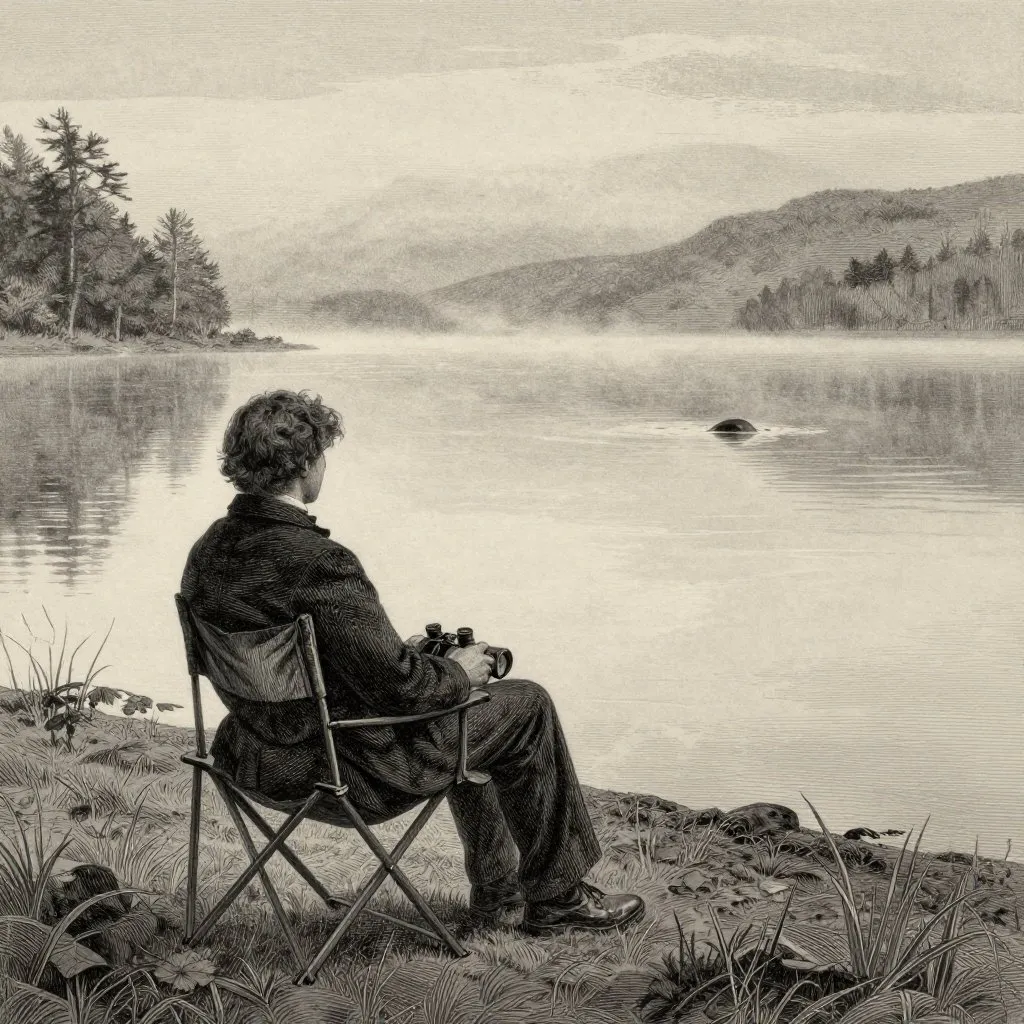
Every year, people travel to the banks of Loch Ness and watch. Some bring binoculars. Some bring telephoto lenses, the kind that cost as much as a used car. Some just sit in folding chairs and look at the water. The Official Loch Ness Monster Sightings Register has logged over 1,100 reports since recorder Gary Campbell started maintaining it in 1996. He has noted that sightings increase during warmer months, when tourism peaks. Whether this reflects the creature coming closer to the surface in summer, or more people looking at the water in summer, he has not speculated publicly. He is a professional.
Each sighting report describes the same essential thing. Something broke the surface. It was large. It moved. Then it was gone. Some reports include photographs that show a dark shape at a distance. Some include just a description. All of them end the same way: the surface went still, and whatever it was went back down.
It could be a wave. Boats create wakes that travel for miles on a calm loch. It could be logs. Peat-soaked wood can sink to the bottom of a lake, build up gas over time, and shoot back to the surface without warning. This is a real phenomenon, and it sounds like something you would write to get out of a parking ticket. It could be a very large eel moving in an unusual way. It could be nothing. The rational mind wants to close this case and move on.
But the loch is 23 miles long and 700 feet deep, and most of it has never been clearly seen by anything. The sonar found three things it couldn't name and then lost them. The DNA study found creatures that shouldn't be as large as they apparently are. Every decade, someone comes up with a better instrument, points it at the water, and gets an answer that raises a new question. The loch does not care. It just sits there, cold and dark and unhurried, keeping its water the color of strong tea and its opinions entirely to itself.
That is not nothing. That is a very particular kind of patience.
Field Notes
- Loch Ness contains approximately 7.4 cubic kilometers of water, more fresh water than all the lakes of England and Wales combined. Its deepest point is 230 meters (755 feet).
- The "Surgeon's Photo" of 1934, the most iconic Nessie image, was revealed in 1994 as a hoax involving a modified toy submarine. The confession came from Christian Spurling, stepson of hoaxer Marmaduke Wetherell, shortly before Spurling's death.
- A 2019 environmental DNA study by the University of Otago found no evidence of large unknown animals in Loch Ness but did detect significant quantities of European eel DNA, suggesting Nessie sightings could be misidentified eels.
- The earliest written account of a creature in Loch Ness appears in Adomnan of Iona's "Life of St. Columba," written in the 7th century, describing an event said to have occurred in 565 AD.
- The Official Loch Ness Monster Sightings Register, maintained by recorder Gary Campbell since 1996, has logged over 1,100 reported sightings. Campbell has noted that sighting frequency increases in warmer months when tourism peaks.
Dig Deeper
Want the facts behind the folklore? Explore the real history, science, and enduring mystery of Loch Ness.
Learn more about the Loch Ness Monster