The First Sighting
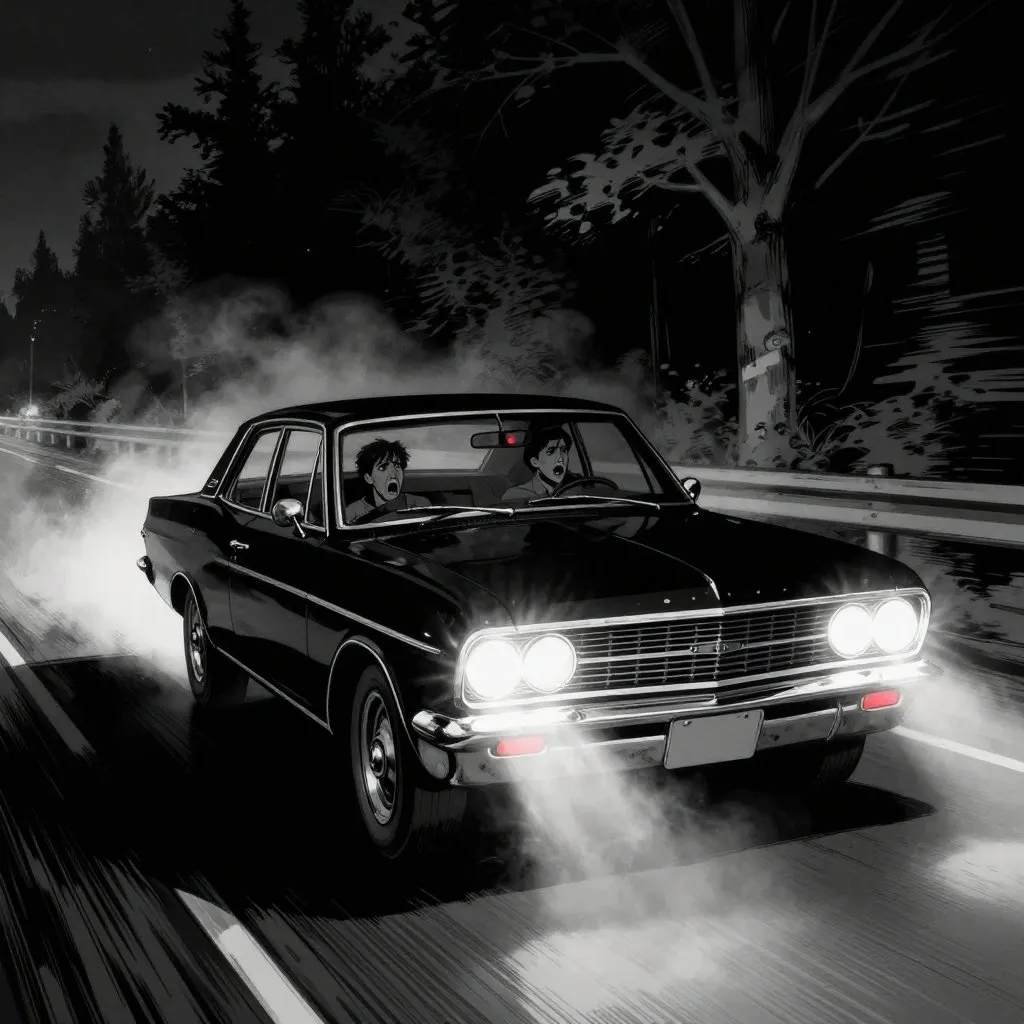
It was November 15, 1966. Two young couples were driving near an abandoned TNT plant outside Point Pleasant, West Virginia. The kind of road you don't take on purpose. The kind of night you remember whether you want to or not.
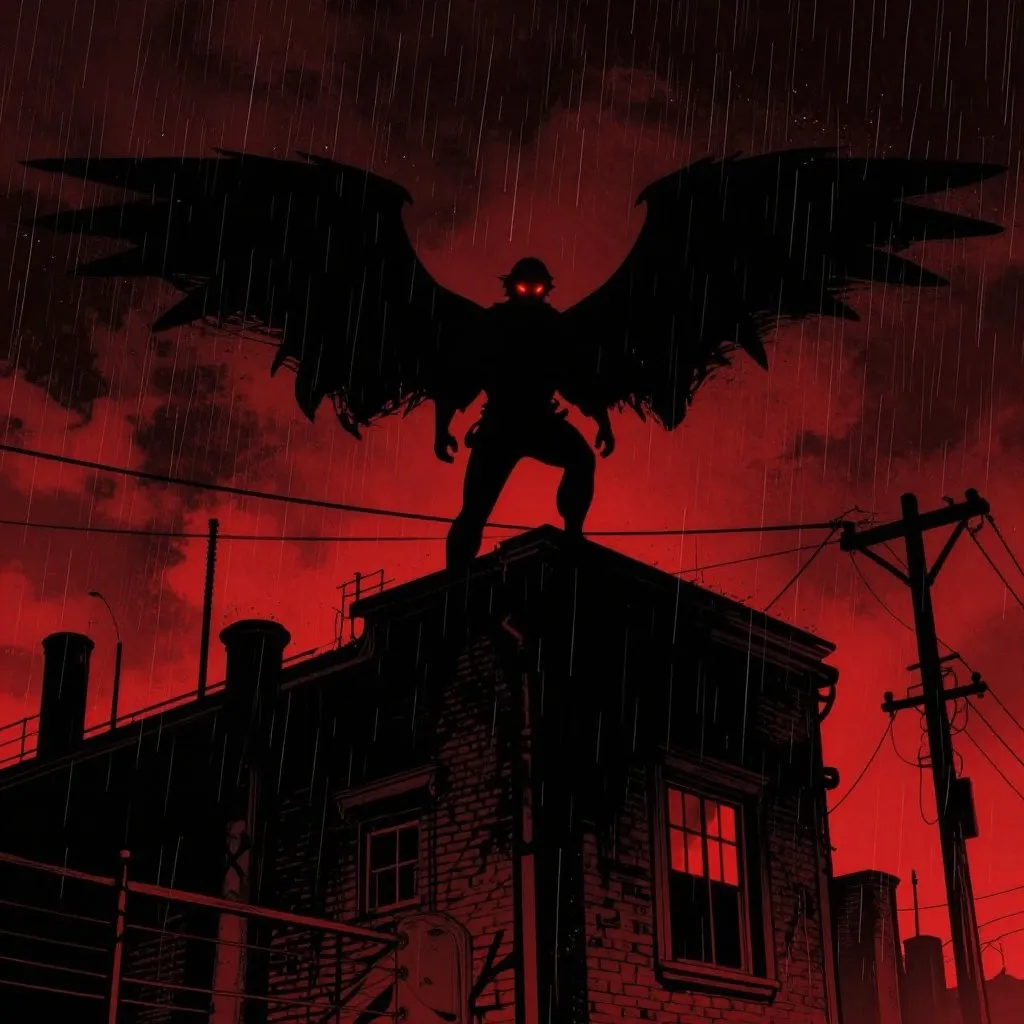
Something was standing near the road. Not moving. Not hiding. Just standing. It was tall, seven feet at least, gray, with wings folded against its back the way a coat hangs on a hook. And it had eyes. Large, red, glowing eyes that did not blink and did not look away.
They drove. Fast. The speedometer passed 100 miles per hour and kept climbing. The thing followed. Not scrambling after them. Not flapping hard. Just flying, effortlessly, keeping pace with a car doing triple digits on a West Virginia back road. Its wings barely moved. This was not effort for it. This was a light jog.
At the city limits, it stopped. Just stopped. As if there were a line on the ground it had decided not to cross. The four people in that car drove straight to the Mason County courthouse and told a deputy sheriff everything. The deputy took the statement without laughing. Whether that was professionalism or something else, none of them asked.
Thirteen Months of Company
It did not leave.
Over the next thirteen months, more than 100 people in and around Point Pleasant reported seeing the creature. A man walking his dog looked up and found it perched on his roof. A group of gravediggers paused their work to watch it glide over the treetops. Two volunteer firefighters described something "large, dark, and bird-shaped" hovering above the TNT plant. Each account was separate. Each witness had, until that moment, been going about a completely ordinary evening.
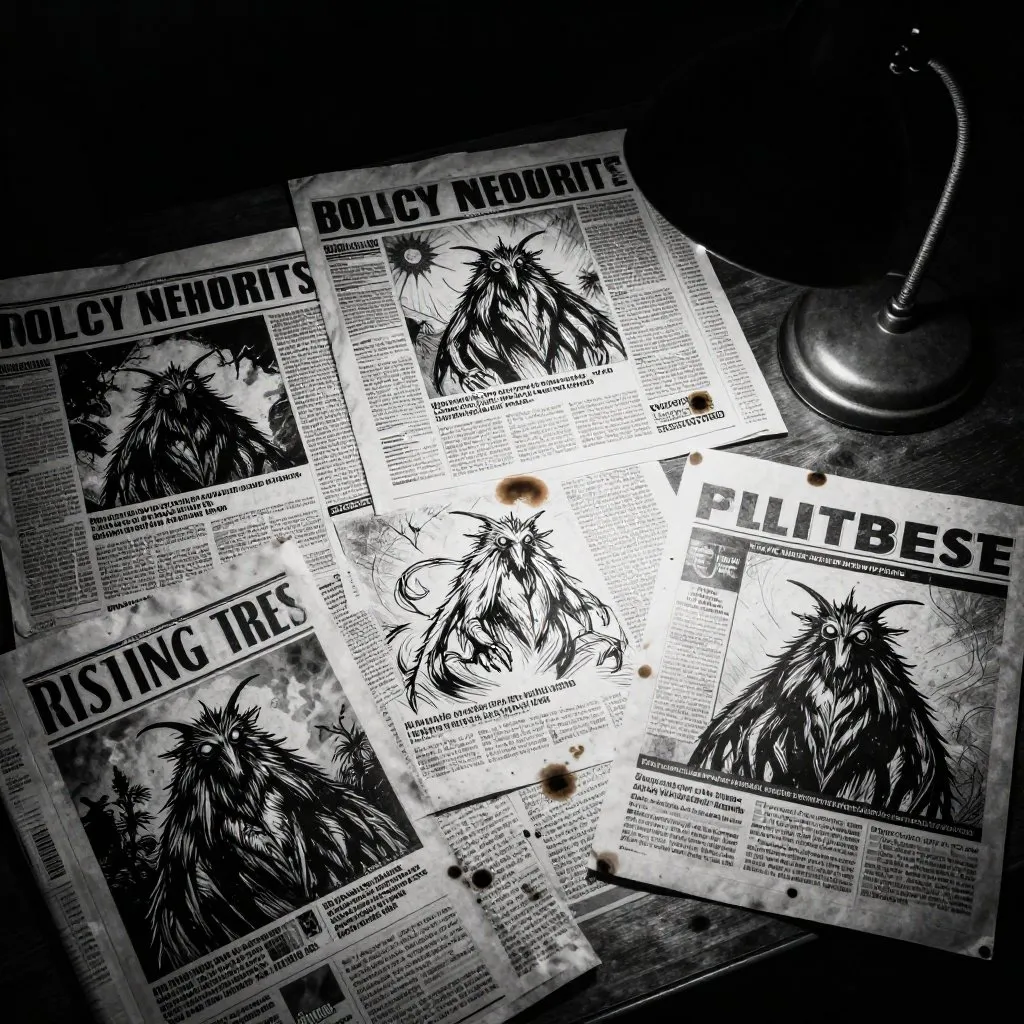
The local newspaper gave it a name. Mothman. They borrowed it from a villain on the Batman television show, which was popular that year. The creature, presumably, did not watch Batman. It had no opinion on the name. It had no apparent opinions on anything. It showed up. It stared. It left. This was its entire personality, and it committed to that personality for over a year.
Always at night. Always with those red eyes. Always near the same stretch of river, the same cluster of abandoned buildings, the same general radius of Point Pleasant. It was not traveling. It was not passing through. Whatever it was doing, it was doing it here, in this town, with total consistency and zero explanation offered.
One hundred witnesses is not a town panicking over shadows. One hundred witnesses is a pattern. Point Pleasant noticed.
The TNT Plant
To understand where this was happening, you need to understand the place.
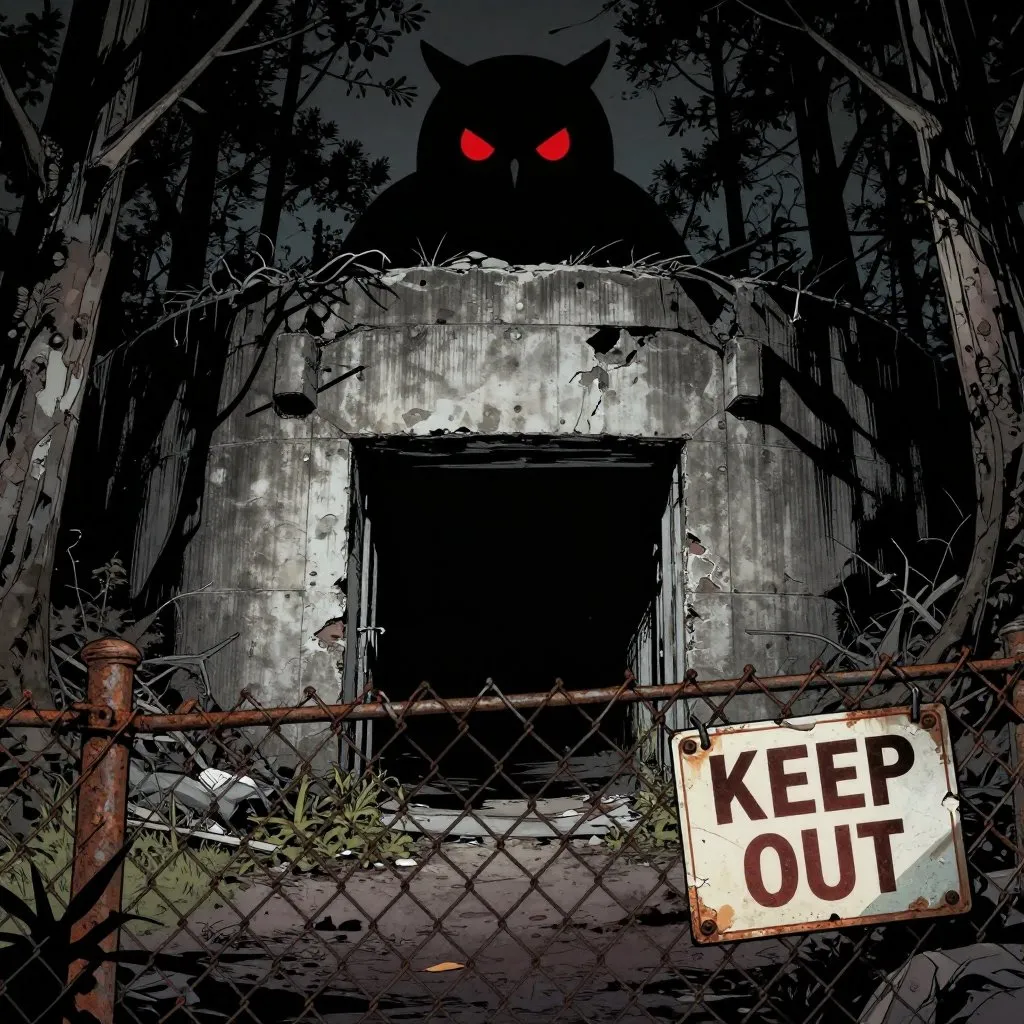
The West Virginia Ordnance Works was a World War II munitions facility. Eight thousand acres. Built to make TNT for the war effort, and it did, successfully, until the war ended and the Army walked away. By 1966 it had been abandoned for two decades. What remained was a maze of concrete igloos, underground tunnels, rusted chain-link fencing, and the specific silence that settles over a place where no one goes. It sat five miles north of Point Pleasant, surrounded by woods, largely forgotten.
This is where most of the sightings happened. This is where a seven-foot creature with glowing red eyes apparently found the atmosphere agreeable. Which, honestly, tracks. If you were going to pick a zip code in West Virginia to haunt, this is the one you'd pick.
Wildlife biologists, when asked, offered the rational alternative: barred owls. Owls have reflective eyes that can appear red in certain light. A large owl, startled in the dark, with its wings spread, seen from a moving car. A sandhill crane stands four feet tall and has a wingspan of almost seven feet. Both are genuinely large birds. Both could, in the wrong conditions, make a reasonable person uncomfortable.
This explanation has a lot going for it. It is scientifically credible, biologically plausible, and requires no revision of the laws of physics. It has one weakness, which is that none of the witnesses described an owl. They described something that followed their car at 100 miles per hour. Owls top out around 40. The math does not cooperate.
The Bridge
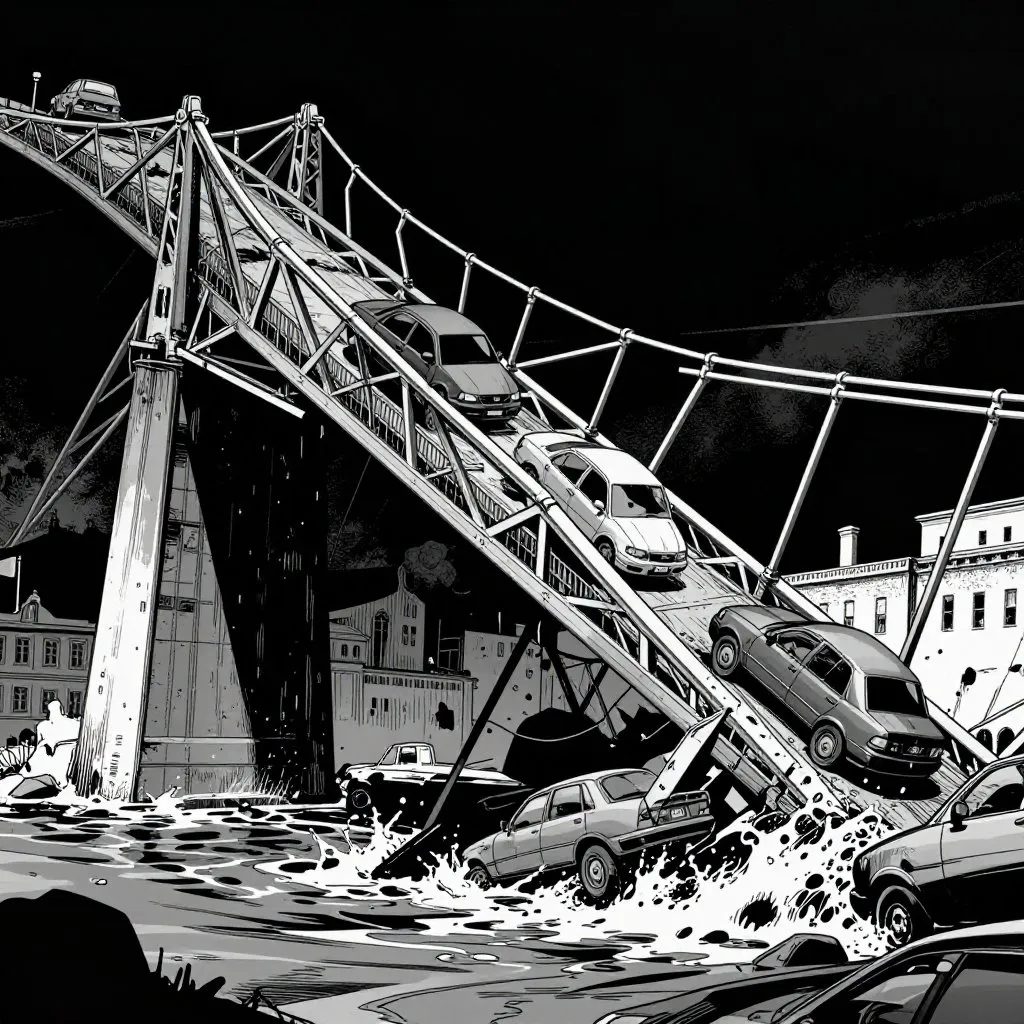
The Silver Bridge was a local landmark. Residents of Point Pleasant crossed it daily. It connected the town to Gallipolis, Ohio across the Ohio River, and it had been doing that job since 1928. An eyebar chain suspension bridge, which is an engineering approach that chains a series of metal bars together to hold up the roadway. The logic is sound. The weakness is specific: every bar in the chain depends on every other bar. There is no redundancy. One failure is all it takes.
Eyebar 330 had a flaw. A stress corrosion crack, barely larger than a tenth of an inch, invisible to any inspection that was being conducted at the time. It had been growing since the bridge was built. Slowly. Quietly. For thirty-nine years.
On December 15, 1967, at approximately 5:00 PM, the evening commute was underway. Rush hour traffic. People heading home for dinner. Eyebar 330 cracked through. The chain reaction took less than sixty seconds. The entire bridge dropped into the Ohio River, taking 31 vehicles and 46 people with it. It remains the deadliest bridge disaster in American history for its time.
In Point Pleasant, on that date, Mothman sightings stopped.
Not tapered off. Not became less frequent. Stopped. Completely. The creature that 100 people had been seeing for thirteen months was simply no longer there.
The Connection
There is a version of this story where the timing is a coincidence. A creature appears, spooks a town for a year, departs. A bridge fails. Two separate things. This version has the advantage of not requiring you to believe in prophetic monsters, which is a real advantage if you're the kind of person who values that sort of thing.
Then there's the other version.
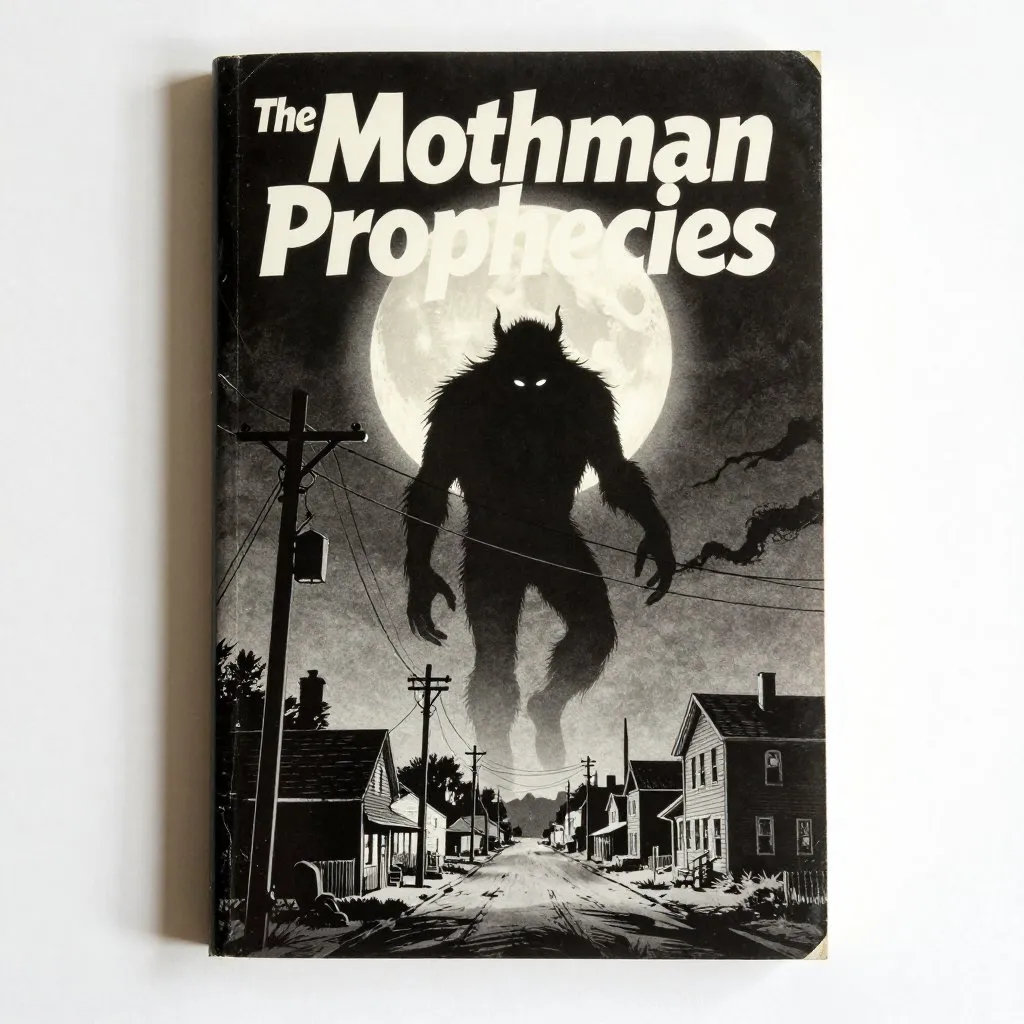
John Keel was a journalist who had been investigating the Mothman phenomenon since the early sightings. He stayed in Point Pleasant. He interviewed witnesses. He collected reports. He connected Mothman to a broader pattern of strangeness in the area: UFO sightings, reports of Men in Black, phone calls from strangers warning of disasters that then occurred. In 1975 he published "The Mothman Prophecies," arguing that Mothman was not a creature at all but an ultraterrestrial entity, something from outside our understanding, appearing before major disasters as a harbinger. A warning system with terrible UX.
The book found an audience. It found a much larger audience in 2002 when it was adapted into a film starring Richard Gere and Laura Linney. Richard Gere plays a man whose wife sees Mothman before she dies. He goes to Point Pleasant and cannot leave. Strange things happen. It is a legitimately unsettling film that handles the material with more care than it had to.
Neither Keel nor Gere nor anyone else has satisfactorily explained the communication strategy. If you are an interdimensional entity who wants to warn people that a bridge is about to fail, there are options available to you. You could appear to a bridge inspector. You could appear to a civil engineer. You could, in theory, appear near the specific eyebar that is about to crack and indicate it with your enormous glowing eyes. Instead, Mothman perched on rooftops and stared at strangers for thirteen months without saying anything. As warning systems go, this is not the one you'd design from scratch.
The Statue
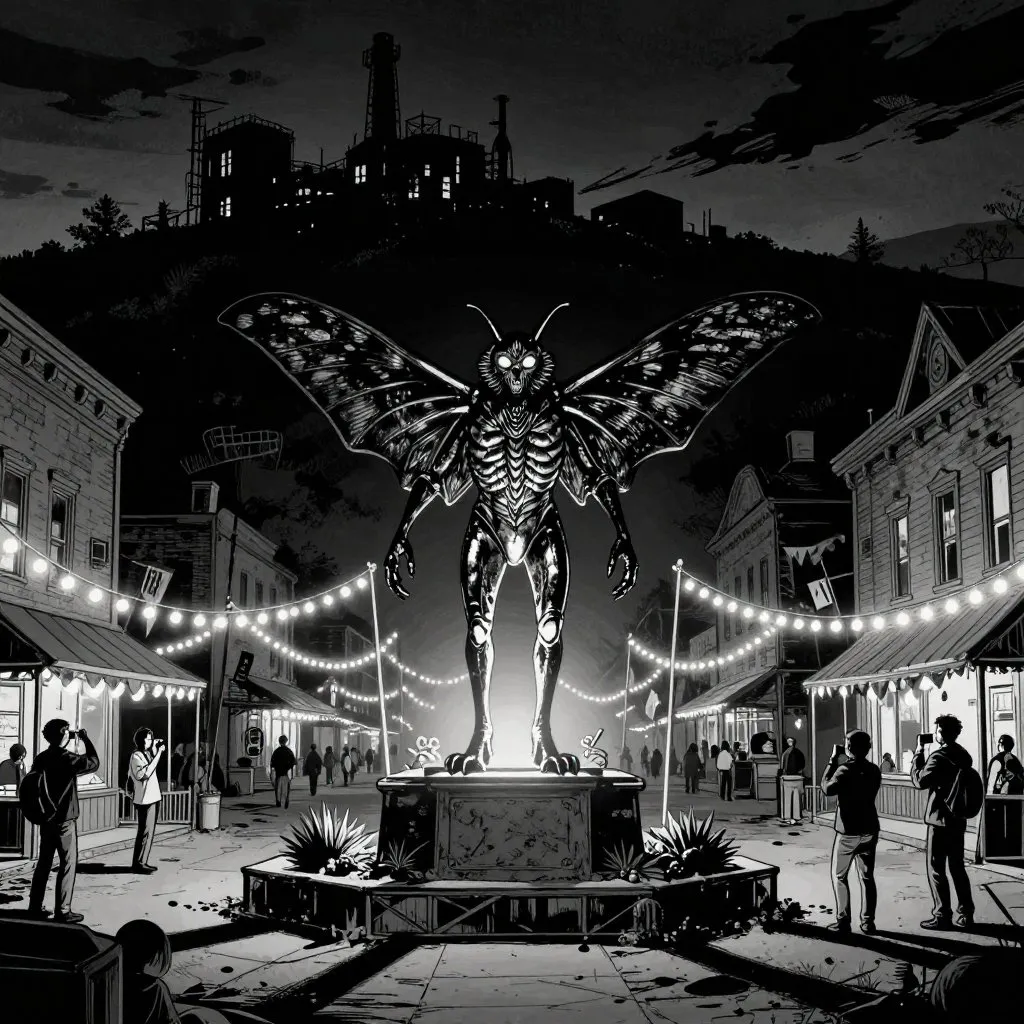
Today there is a twelve-foot stainless steel Mothman statue in the center of Point Pleasant. Sculptor Bob Roach unveiled it in 2003. It is muscular. It is shiny. It has the wingspan of a small plane and the physique of a creature that does not skip leg day. It looks almost nothing like what witnesses described in 1966. What witnesses described was gray, hunched, unsettling. The statue looks like it could bench press a Buick and feels good about it.
Every third weekend of September, Point Pleasant hosts the Mothman Festival. It has been running since 2002. It draws somewhere between 10,000 and 12,000 visitors to a town of 4,000. There are vendors and hayrides and live music. There is a Miss Mothman pageant. There is a museum. Somewhere in that museum there are photographs and newspaper clippings from 1966 and 1967, the original accounts, the actual thing that happened, surrounded now by merchandise and funnel cake. Point Pleasant found what Roswell found: the monster is worth more alive than explained.
The Silver Bridge was replaced in 1969. The new bridge uses a different design. It does not rely on eyebar chains. The TNT plant is slowly disappearing into forest, the concrete igloos cracking, the tunnels filling with mud and groundwater, the chain-link fence losing its argument with the vegetation. The place is becoming something else.
Mothman has not been seen in Point Pleasant since December 1967. This is either the best news or the most unsettling news, depending on your interpretation. The optimistic reading is that whatever it was, it's gone. The other reading is that it was tied to something specific. That it was watching for a reason. That the reason arrived, and played out, and the job was done. And that somewhere, there is a place where eyebar 330 is quietly growing in a bridge that nobody has looked at recently, and a pair of red eyes has started appearing at night, and a deputy sheriff somewhere is picking up a phone.
Field Notes
- The Silver Bridge collapse on December 15, 1967 killed 46 people and led to the passage of the Federal-Aid Highway Act of 1968, which established the National Bridge Inspection Standards requiring regular inspection of all highway bridges.
- The original Mothman sightings occurred near the West Virginia Ordnance Works, a 8,000-acre former TNT production facility used during World War II, located about 5 miles north of Point Pleasant.
- John Keel's 1975 book "The Mothman Prophecies" connected the sightings to the bridge collapse and various paranormal phenomena including UFO sightings and Men in Black encounters reported in the same area during 1966-1967.
- The Mothman statue in Point Pleasant was sculpted by artist Bob Roach and unveiled in 2003. It stands 12 feet tall and is made of stainless steel. It has become one of West Virginia's most photographed landmarks.
- The annual Mothman Festival, held every third weekend of September in Point Pleasant, has been running since 2002 and typically draws 10,000 to 12,000 visitors to a town with a permanent population of about 4,000.
Dig Deeper
Want the facts behind the folklore? Explore the real history of Mothman, the Silver Bridge, and Point Pleasant.
Learn more about Mothman